Guides/Surfaces·7 min read·Updated September 6, 2026
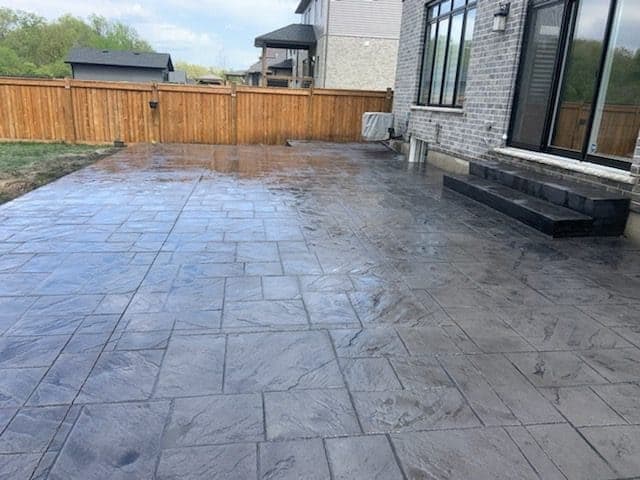
A stamped patio does not have to stay faded once the original sealer wears out. Here is how resealing brings colour and pattern definition back to older stamped concrete.
Key takeaways
- 1Fading in stamped concrete is usually the sealer wearing down and losing its UV protection, not the concrete's integral colour itself disappearing.
- 2Resealing does not add new colour so much as it restores the sealer layer that was making existing colour look rich and saturated in the first place.
- 3A previously sealed surface needs to be assessed before resealing, and a failing old coating usually has to be stripped so the new sealer bonds evenly.
- 4Semi-gloss is the most common recommendation for restoring stamped concrete because it enhances colour and pattern without excessive reflectivity.
- 5Faded stamped concrete that has gone several years without resealing benefits from being checked sooner rather than later, since UV and weather exposure continue in the meantime.
Stamped concrete is chosen for its pattern and colour, so when it starts looking washed out, dull or patchy, it can feel like the whole investment has faded along with it. In most cases, the concrete itself is fine. What has actually happened is that the original sealer coat, which was doing most of the work to make the colour look rich and saturated, has worn down from years of UV exposure, foot traffic and Southwestern Ontario weather. Understanding that distinction changes the fix considerably, since restoring the look is usually a matter of proper resealing rather than any kind of colour repair to the concrete itself.
Why stamped concrete fades in the first place
Stamped concrete gets its colour either through an integral colour mixed into the concrete before pouring, a colour hardener applied to the surface during installation, or a stain applied afterward. In every case, the sealer applied on top is what protects that colour from UV fading and gives it the depth and saturation that makes stamped concrete look good in the first place. Over time, UV exposure breaks down the sealer's protective film, and the colour underneath starts to look flatter and less vibrant, even though the actual pigment in the concrete has not necessarily changed much. Foot traffic, exposure to rain, and years of freeze-thaw cycling all accelerate this process, which is why a patio or walkway that has gone unsealed for several years often looks noticeably more faded than one on a regular sealing cycle.
How to tell if it is the sealer or the concrete
A useful way to check is to look at the wear pattern. If fading is uneven, with areas that see more foot traffic or direct sun looking more washed out than shaded or low-traffic spots, that is a strong sign the sealer has worn unevenly rather than the underlying colour itself failing. Chalky residue on the surface, or a texture that feels rougher and more porous than it used to, also points to a worn-out sealer rather than a colour problem. True colour loss in the concrete itself is much less common and usually only shows up after many years of completely unsealed exposure. In the vast majority of cases All-Seal assesses, restoring a faded stamped patio comes down to properly resealing it, not correcting the concrete's actual pigment.
Why resealing restores the look rather than just adding shine
It can look, from the before-and-after, like a fresh coat of sealer is adding new colour to the concrete. What it is actually doing is restoring the optical effect the original sealer had: light bouncing off a clean, even, properly bonded film brings out the depth of the colour underneath the same way water on a stone deepens its colour temporarily. Once that film is worn thin or patchy, the same colour underneath just reads as flatter and duller, even though it has not changed. A properly applied fresh coat brings that same depth and richness back, which is why resealing so often looks like a dramatic transformation on a stamped patio that has gone a few years without attention.
Assessing the old coating before resealing
Since the surface has already been sealed at least once, restoring faded stamped concrete starts with assessing the existing coating rather than jumping straight to a new application. A coating that is worn but still generally sound, meaning it is not peeling or flaking, can often be cleaned thoroughly and resealed directly on top. A coating that is failing, showing peeling, whitening or uneven adhesion, typically needs to be stripped first so the new sealer bonds evenly across the whole surface rather than sitting unevenly over patches of old, failing material. Skipping this step on a badly worn coating tends to produce an uneven result, since new sealer applied over flaking old sealer will not look consistent no matter how carefully it is applied.
- Fading is usually caused by UV wear on the sealer, not loss of the concrete's actual colour
- Uneven fading concentrated in high-traffic or sun-exposed areas points to worn sealer
- A sound old coating can typically be cleaned and resealed directly
- A failing, peeling coating generally needs to be stripped before resealing
- Semi-gloss is the most common sheen recommendation for restoring colour depth on stamped patterns
- The longer a faded surface goes unsealed, the more continued UV and weather exposure it takes on in the meantime
Why semi-gloss is usually recommended for restoration work
For stamped concrete specifically, semi-gloss is the sheen All-Seal recommends most often, since it enhances colour and pattern definition with a soft satin shine without the strong reflectivity of a full high-gloss finish. On a restoration job, this matters because the goal is usually to bring the original character of the pattern and colour back convincingly, rather than dramatically changing the look with a much glossier finish than the patio originally had. Homeowners who want a stronger wet-look effect can choose high gloss instead, and it is a reasonable option for stamped concrete meant to stand out, but semi-gloss tends to read as the most natural restoration of a faded surface's original appearance. More on sheen choice is covered in our companion guide on high gloss versus semi-gloss versus matte at /resources.
The full process for restoring a faded stamped patio
Restoration follows the same core process as any sealing job: thorough cleaning through pressure washing to remove dirt, grime and any chalky residue from the old coating, crack and joint repair where needed, full drying, and then application of the chosen sealer once the surface is ready. On a faded, previously sealed surface, the pressure washing step is doing extra work compared to a first-time sealing job, since it needs to clean off residue from years of wear as well as prepare the surface for either a fresh topcoat or a full strip and reseal. This is one of the reasons restoration jobs on older, more worn stamped concrete tend to take a bit more prep time than a driveway that has never been sealed before.
Timing matters more than it might seem
A faded stamped patio does not need to be treated as an emergency, but leaving it unaddressed for additional years does mean more continued UV and weather exposure on a surface that is already under-protected. Since the worn sealer is providing progressively less protection against water infiltration and freeze-thaw damage even before the fading becomes obvious, a patio that looks noticeably faded has likely also lost some of its practical protection, not just its appearance. Addressing it sooner rather than later helps limit how much additional wear the concrete underneath takes on while the surface sits unprotected.
Getting a faded patio assessed
If a stamped patio, walkway or pool deck across Woodstock, St. Thomas, Brantford, Hamilton, Kitchener-Waterloo or Cambridge is looking dull, chalky or washed out compared to when it was first installed, the most useful first step is a free on-site inspection. All-Seal can assess whether the existing coating is sound or needs stripping, recommend a sheen suited to restoring the original look, and provide a quote specific to the surface's condition and size. You can request an inspection through /contact or by calling 519-266-6796, and read more about the service itself at /services/stamped-concrete-sealing. Protect. Preserve. Seal, and bring the colour back while there is still time before another winter of unprotected exposure.
Frequently asked questions
Is faded stamped concrete a sign the colour is permanently gone?
Usually not. Fading is most often caused by the sealer's UV protection wearing down rather than the concrete's actual colour disappearing. A properly applied fresh coat typically restores the original depth and richness.
Do I need to strip the old sealer before resealing a faded patio?
It depends on the condition. A worn but sound coating can often be cleaned and resealed directly, while a failing, peeling coating usually needs to be stripped first so the new sealer bonds evenly.
Which sheen is best for restoring stamped concrete colour?
Semi-gloss is the most common recommendation, since it enhances colour and pattern definition with a soft satin finish without the strong reflectivity of high gloss, which tends to read as a natural restoration of the original look.
How can I tell if my stamped patio's fading is from the sealer or the concrete itself?
Uneven fading, concentrated in high-traffic or sun-exposed areas, along with a chalky residue or rougher texture, usually points to a worn sealer rather than a change in the underlying colour.
Should I wait to reseal a faded patio if it still looks okay overall?
It is better not to wait too long, since a worn sealer is also providing less protection against water and freeze-thaw damage, even before the fading becomes very noticeable.
How do I get a quote to reseal a faded stamped patio?
Request a free on-site inspection through /contact or by calling 519-266-6796. All-Seal will assess the existing coating, recommend a sheen and provide a quote based on the surface's condition.
Keep reading
Surfaces · 8 min
Sealing a Garage Floor: Hot-Tire Pickup, Salt and Oil
A garage floor faces a different kind of abuse than a driveway or patio: tracked-in salt, oil drips, and hot tire pickup. Here is how sealing addresses each one.
Surfaces · 8 min
Pool Deck Sealing: Chlorine, Sun and Slip Resistance
A pool deck deals with chlorine splash-out, hours of direct sun, and bare feet walking on wet concrete all summer. Here is how sealing addresses each of those pressures.
Finishes · 7 min
High Gloss vs Semi-Gloss vs Matte: Which Sheen for Your Concrete
The sealer you choose does more than protect concrete, it changes how the whole surface looks and feels. Here is how to pick between high gloss, semi-gloss and matte for your property.