Decorative concrete needs a different approach
Coloured, acid-stained and exposed aggregate concrete are chosen specifically for how they look, which means sealing them requires more care than sealing a plain grey driveway. The wrong sealer can trap moisture underneath a decorative finish, cause cloudy whitening on stained concrete, or dull the very texture that makes exposed aggregate distinctive. All-Seal uses breathable sealers matched to the specific decorative finish involved, so the protection enhances the look rather than working against it.
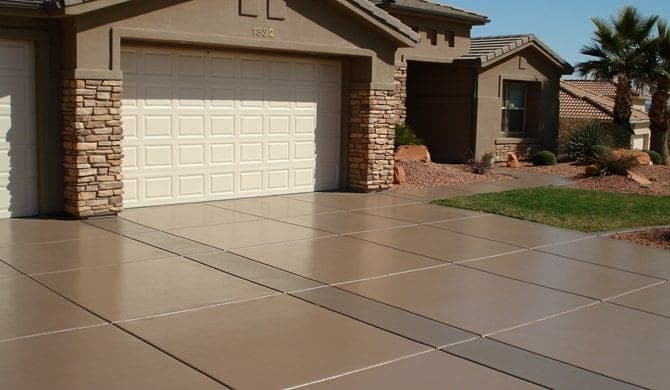
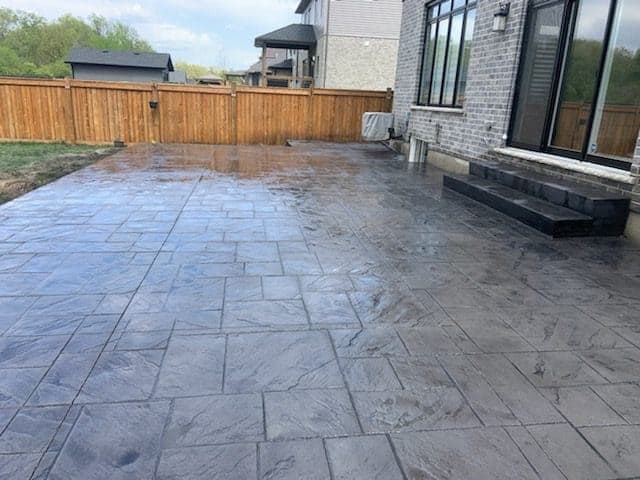
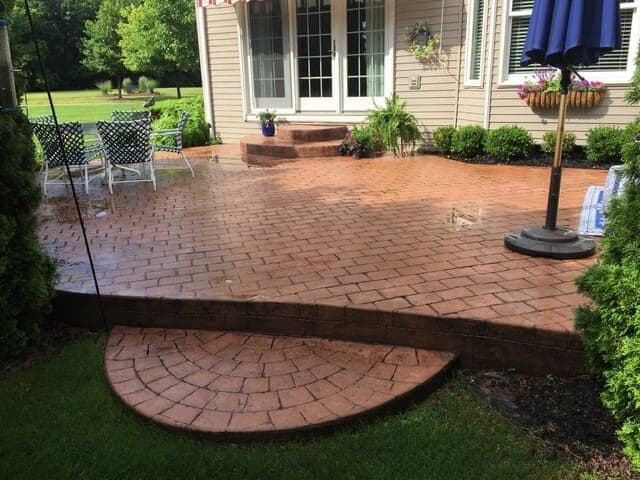
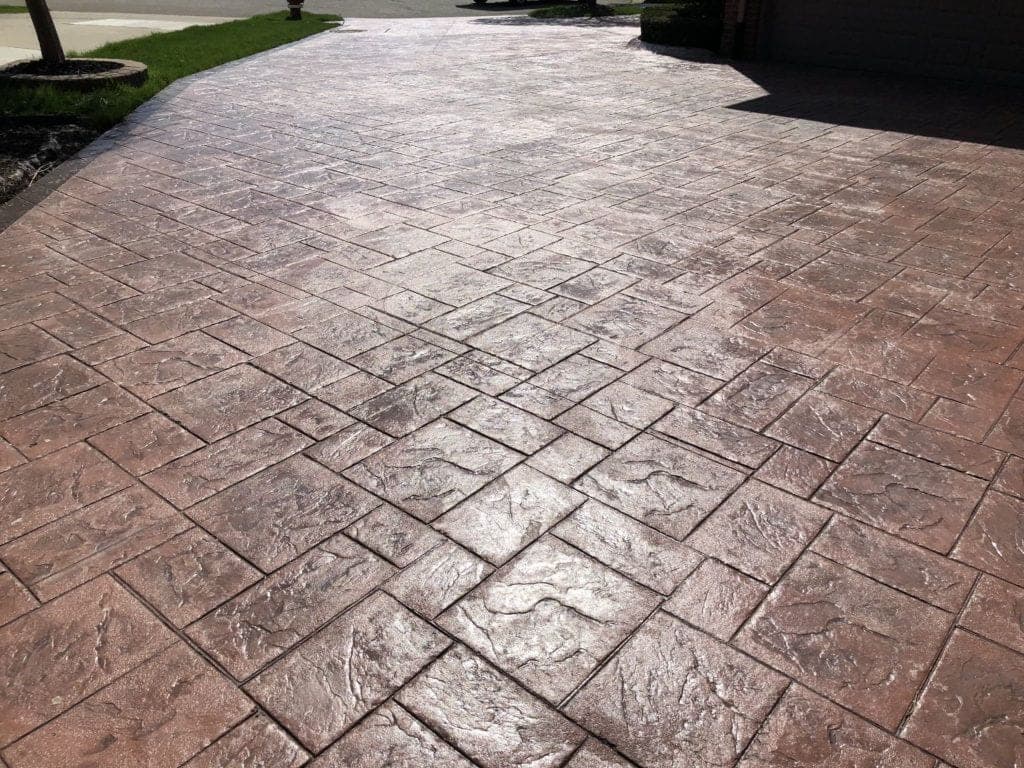
Whether your decorative concrete is a stamped patio with an acid stain, an integrally coloured pool deck, or an exposed aggregate walkway, we treat the sealing process as an extension of the original finish work, not a generic coating applied on top.
Why breathable sealers matter
Concrete is naturally porous, and moisture vapour moves through it constantly, especially in Southwestern Ontario's humid summers and freeze-thaw winters. A non-breathable sealer applied over decorative concrete can trap that moisture vapour underneath the coating, leading to a cloudy, milky-white appearance called blushing or, in worse cases, the sealer lifting and peeling entirely. A breathable sealer allows moisture vapour to pass through while still blocking liquid water, salt and staining from the surface side, which is exactly the balance decorative concrete needs.
Enhancing colour depth on stained concrete
Acid-stained and integrally coloured concrete has a natural depth and variation that a good sealer can genuinely enhance. The right sealer saturates the surface slightly and brings out richness in the colour that is harder to see on dry, unsealed stained concrete. This is one of the more visually rewarding parts of decorative sealing: a stained patio that already looks good typically looks noticeably better once properly sealed, without changing the underlying colour choice you made.
Protecting exposed aggregate texture
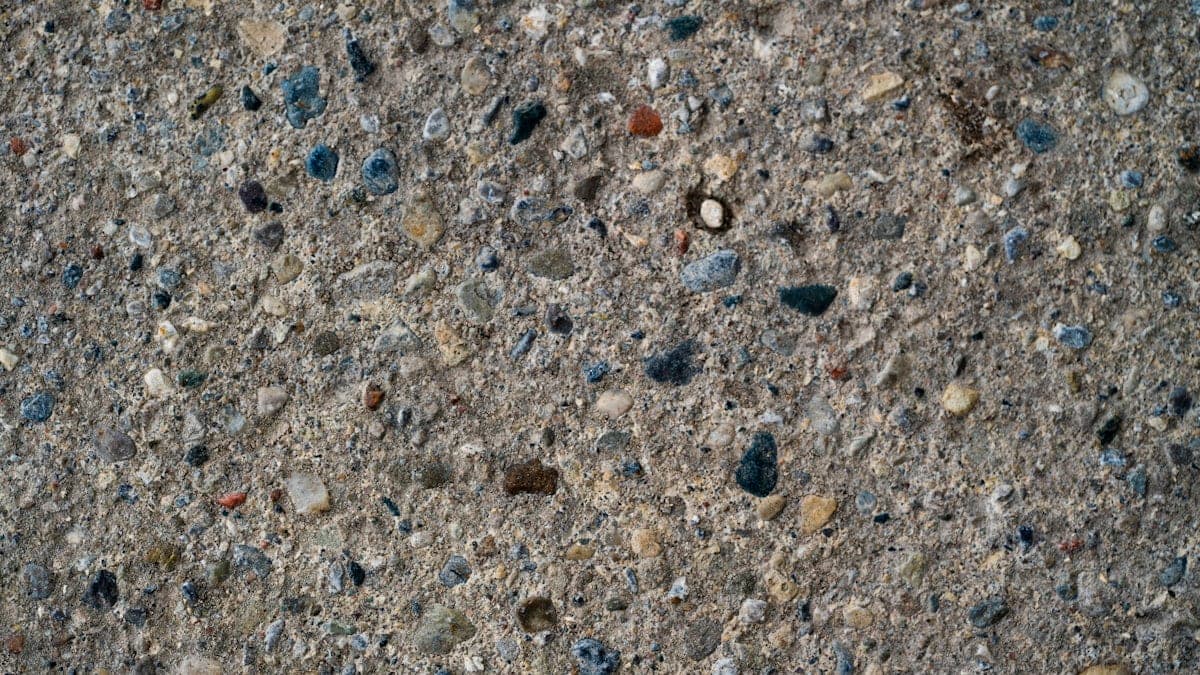
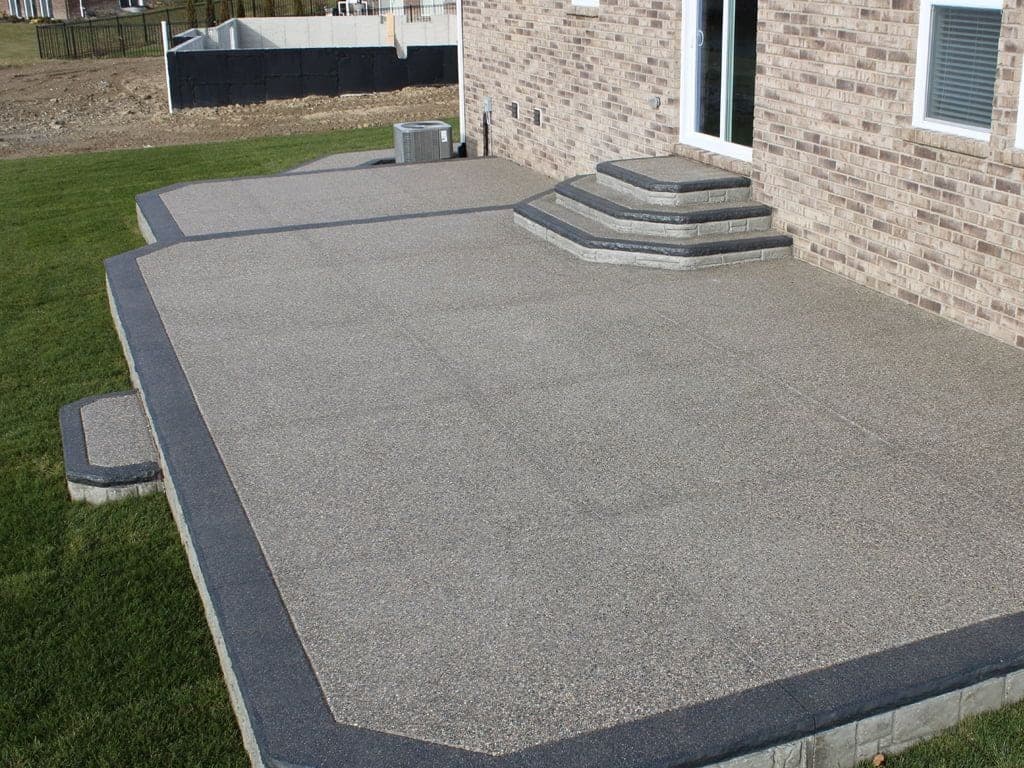
Exposed aggregate concrete relies on its texture as much as its colour, with the stone or pebble surface exposed intentionally during installation. Sealing this type of surface needs to protect the exposed stones and the surrounding matrix from UV fading and staining while preserving the texture that makes the finish distinctive. We select sealers and application methods that work with exposed aggregate specifically, rather than treating it the same as a smooth-finished slab.
UV fading on decorative surfaces
A full Southwestern Ontario summer of direct sun will fade unsealed coloured or stained concrete more noticeably than plain grey concrete, simply because the colour itself has more to lose. UV protection built into the sealer slows that fading significantly, which matters most on decorative surfaces where the colour is the whole point of the investment.
- Enhances colour depth on acid-stained and integrally coloured concrete
- Breathable formula lets moisture vapour escape instead of trapping it
- Prevents cloudy whitening and blushing under the coating
- Protects exposed aggregate texture without dulling it
- UV protection slows fading on coloured surfaces
- Preserves the artistic character of the original finish
Working with previously sealed decorative concrete
Decorative concrete that already has a failing or yellowed sealer on it presents a specific challenge, since the old coating often needs to be stripped carefully to avoid damaging the colour or texture underneath. We assess this during the inspection and explain exactly what stripping and resealing will involve for your specific surface before quoting the work.
Matching product to the specific finish
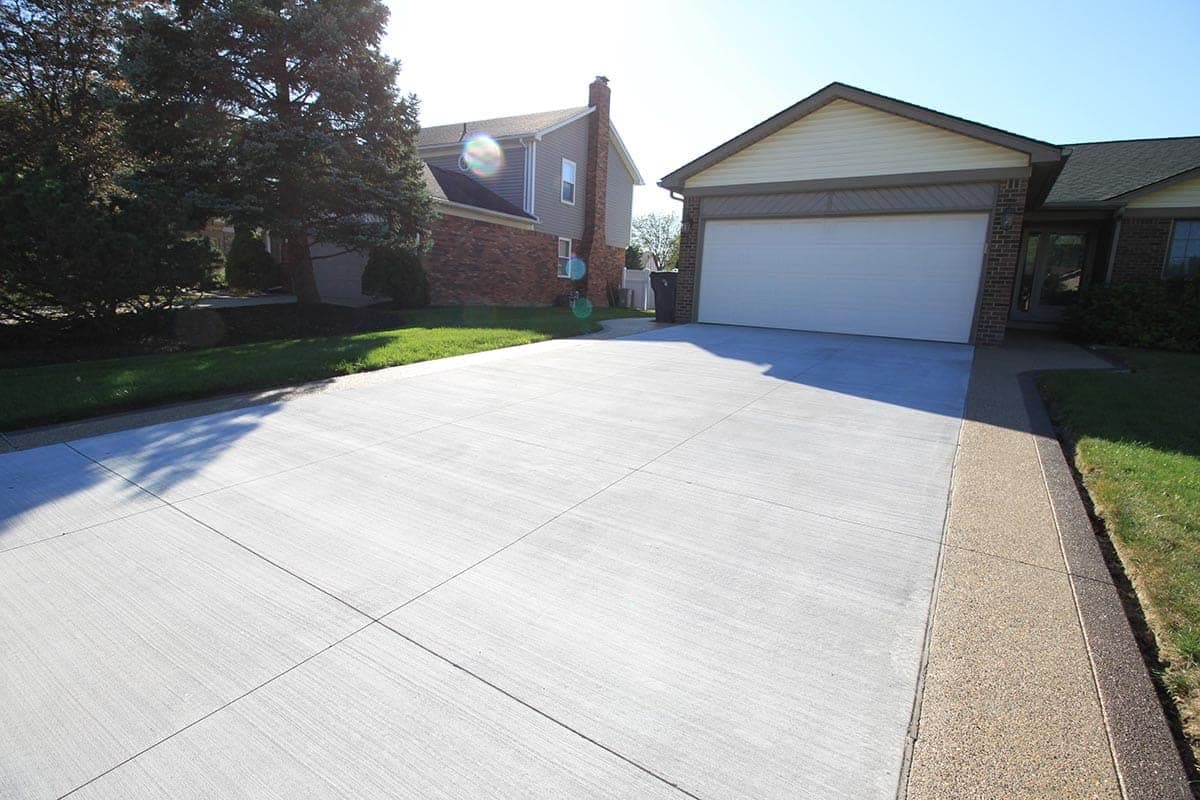
Not every decorative surface calls for the same sealer, even within the category of decorative concrete. A broom-finished, integrally coloured patio behaves differently from an acid-stained stamped driveway, and both differ again from an exposed aggregate walkway. We take the time during the inspection to identify exactly what kind of decorative finish you have and select a sealer suited to it, rather than applying a single generic product across every type of decorative surface on a property.
Timing decorative concrete sealing
Late spring through early fall gives the best results, once the surface has fully dried from spring rain and humidity levels are manageable enough for the sealer to cure evenly without blushing. Scheduling before the first hard frost also gives decorative surfaces the strongest possible defence heading into a Southwestern Ontario winter, when freeze-thaw cycling and road salt exposure put the most pressure on an unprotected finish.