Why Ontario driveways need more protection than most
A driveway in Southwestern Ontario works harder than concrete almost anywhere else in the country. It spends four or five months a year fighting freeze-thaw cycles, gets doused in road salt and calcium chloride all winter, and then bakes through humid summers with parked cars leaning on it in the heat. Unsealed concrete has no defence against any of that. Water gets into the surface pores, freezes, expands, and slowly breaks the concrete apart from the inside. That is how a smooth driveway ends up pitted, flaking or laced with cracks within a handful of winters.
Driveway sealing from All-Seal gives your concrete a barrier against that cycle. We use premium acrylic and polyurethane sealers formulated to shed water, block salt penetration and stand up to UV exposure, so the surface underneath stays solid instead of slowly eroding away.
Road salt is the real enemy
Talk to anyone who has lived through a few Southwestern Ontario winters and they will tell you the salt is worse than the cold. Chloride-based de-icers used on driveways and tracked in from municipal roads along the 401 corridor accelerate scaling, discolour concrete and corrode any embedded rebar or wire mesh over time. Once salt is inside unsealed concrete, there is very little you can do short of grinding and replacing the surface. Sealing keeps that salt on top of the concrete where a garden hose or spring rain can rinse it away, instead of letting it soak in every time you de-ice.
Oxford County clay soils add their own pressure
Around Woodstock and through much of Oxford County, the clay-heavy subsoil under most driveways expands when saturated and contracts as it dries. That movement puts stress on the slab above it, and a driveway with even minor surface deterioration is far more likely to crack under that shifting than one with a sound, sealed surface. Sealing will not stop clay soil from moving, but it does keep water from getting into the concrete itself, which is what turns ordinary ground movement into a visible crack.
Freeze-thaw scaling and spalling
Freeze-thaw damage shows up as scaling (a thin layer flaking off the surface) or spalling (larger chunks breaking away, often around joints and edges). Both start the same way: water sits in the surface pores of the concrete, then freezes and expands on a cold night. Do that forty or fifty times over a Southwestern Ontario winter and even good-quality concrete starts to fail. A properly applied sealer closes those pores so there is far less water sitting in the slab to freeze in the first place.
Stopping oil stains and hot-tire pickup
Two of the most common driveway complaints we hear are oil stains from parked vehicles and hot-tire pickup, where a warm tire lifts a thin layer of unsealed asphalt sealer or softened surface right off the concrete. A sealed driveway resists both. Oil and fluid drips sit on top of the sealer instead of soaking into the concrete, giving you time to wipe them up before they stain permanently, and the sealed surface is far less prone to lifting under a hot tire in July.
- Prevents water infiltration that leads to freeze-thaw cracking
- Blocks road salt and de-icer damage before it soaks in
- Resists oil, gas and fluid stains
- Cuts down on hot-tire pickup marks in summer
- Preserves the original colour and finish of the concrete
- Comes with your choice of Semi-Gloss, High Gloss or Matte sheen
Choosing the right sheen for a driveway
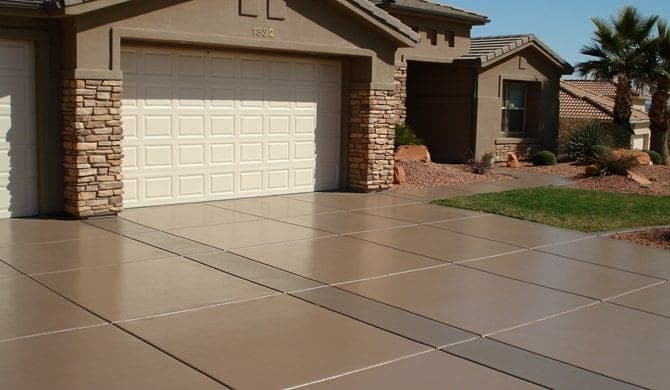
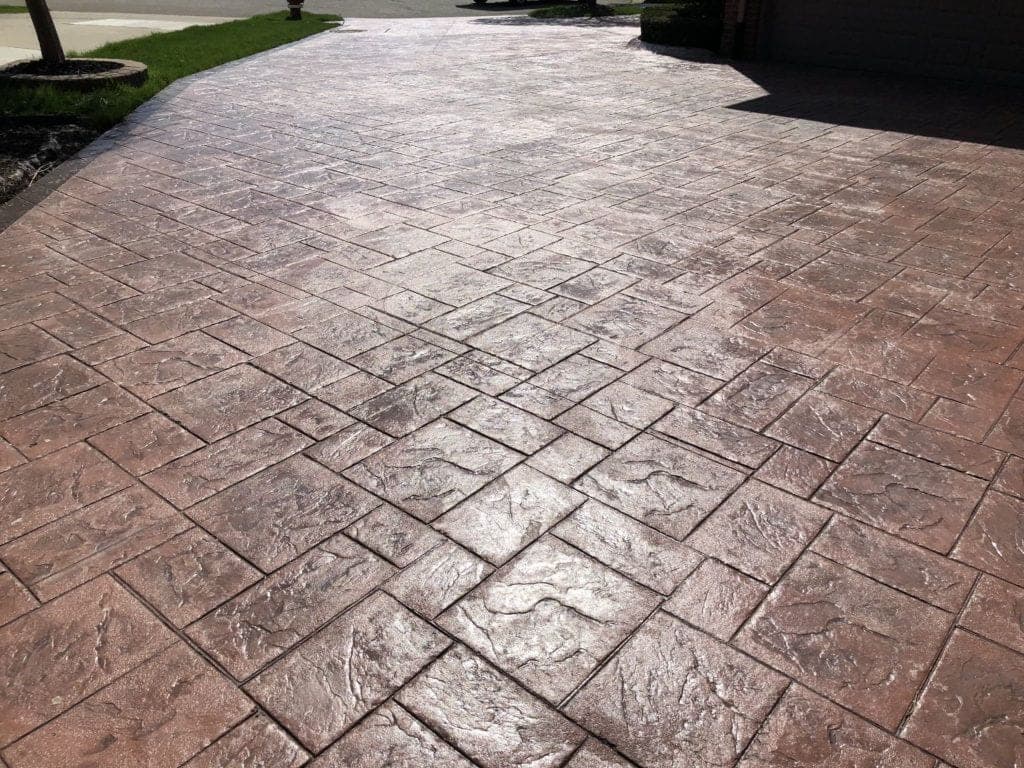
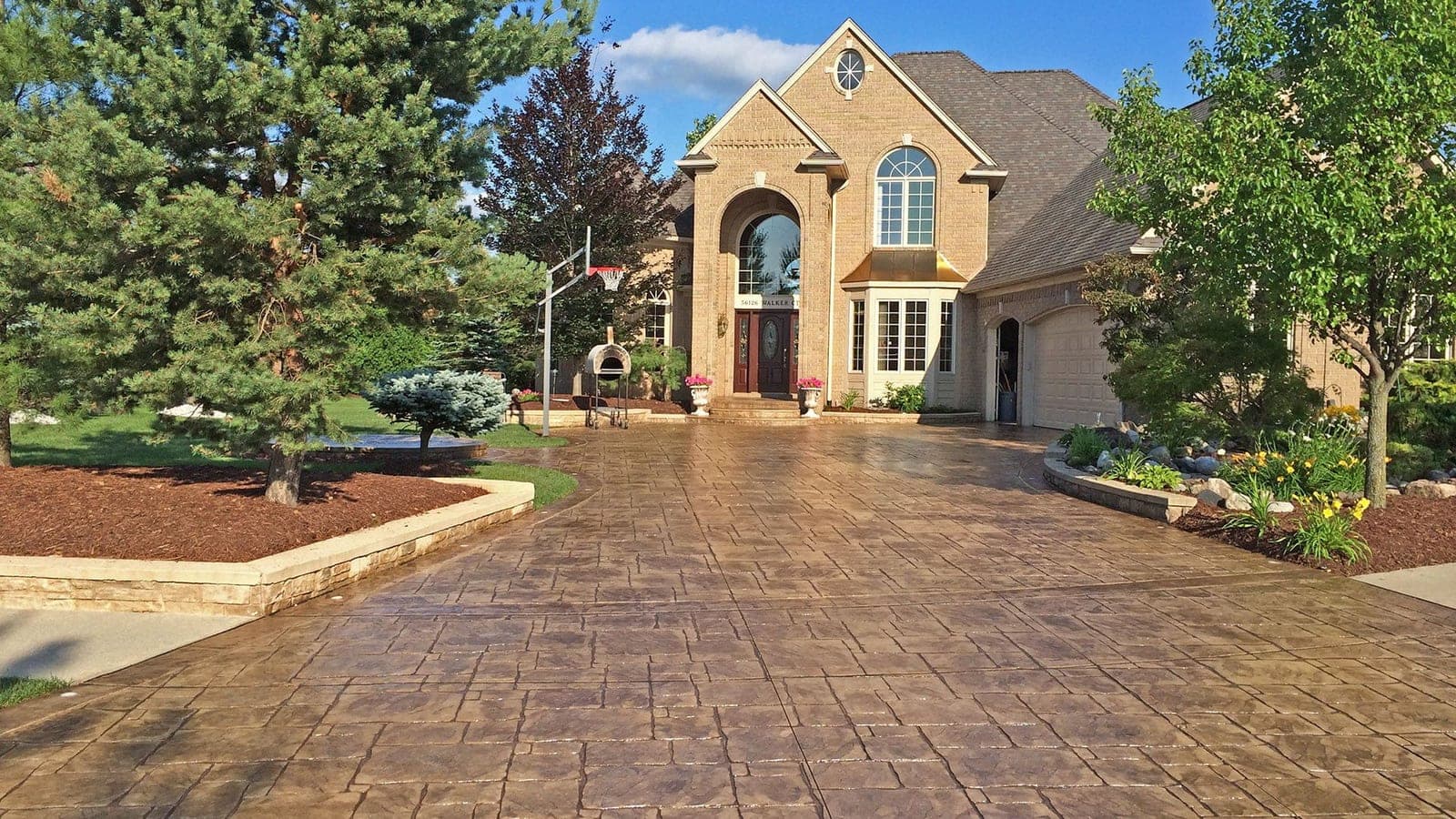
Most driveways we seal go with a Semi-Gloss finish. It gives the concrete a clean, satin look that shows off the surface without the high-shine wet look some homeowners find too glossy on a large expanse of driveway, and it still does an excellent job resisting salt and UV fading. Matte is a good option if you prefer a completely natural, unsealed appearance while still getting full protection, and High Gloss is available for homeowners who want that deep, wet-look finish. Whatever sheen you choose, the protective performance underneath is the same.
Working with a previously sealed driveway
If your driveway already has a sealer on it from a previous application or a different contractor, we assess its condition before recommending anything. A coating that is holding up well can often simply be cleaned and resealed. One that is peeling, cloudy or failing usually needs to be stripped first so the new sealer can bond properly. We will tell you honestly which situation you are in during the free inspection, rather than sealing over a failing coating and having it look poor within months.
Timing your driveway sealing
Late spring through early fall is the ideal window across Southwestern Ontario, once overnight temperatures are reliably above freezing and the concrete has had time to dry out from spring thaw. Sealing before winter sets in gives the new coating the best chance to fully cure before it faces its first freeze-thaw season, road salt and all.