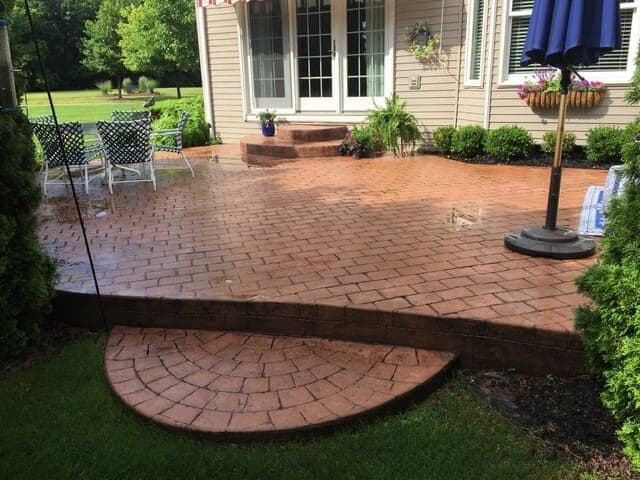
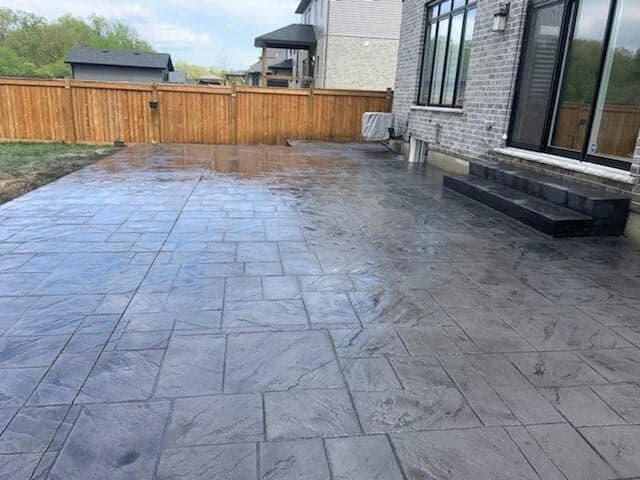
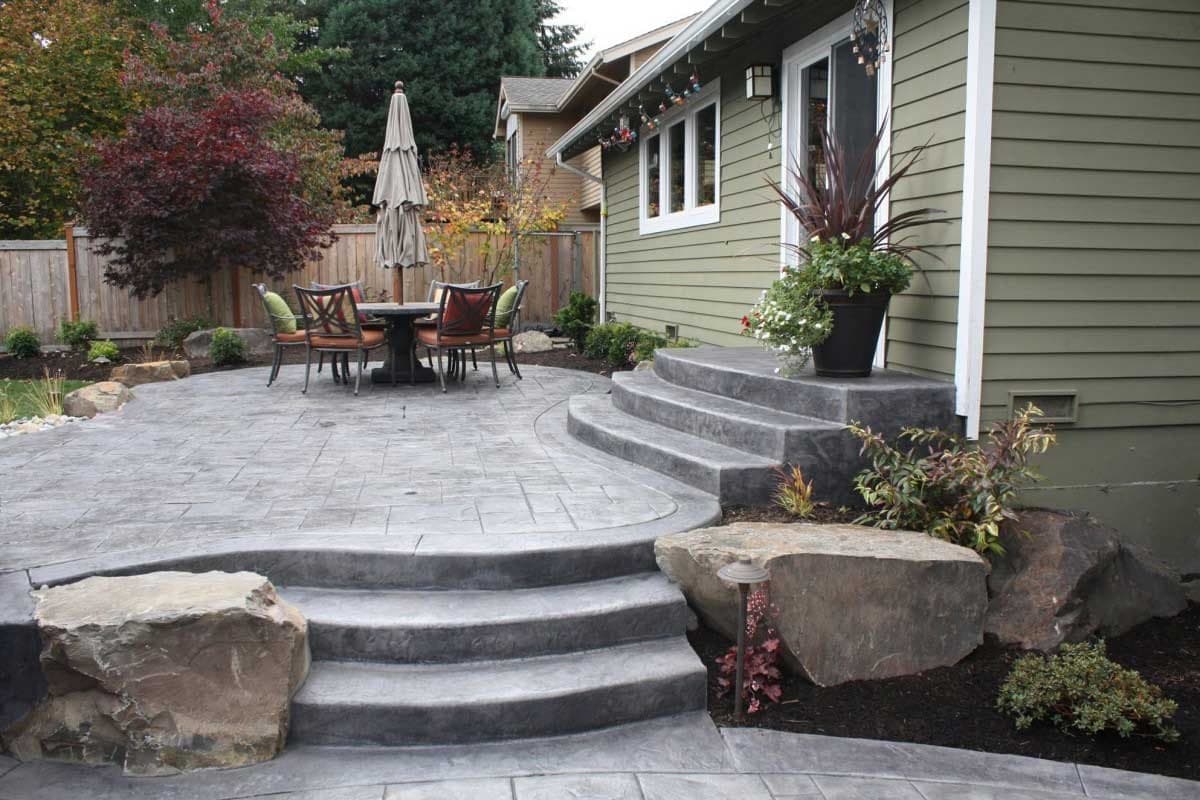
A patio has different demands than a driveway
A patio does not carry vehicle traffic, but it faces its own set of pressures that make sealing worthwhile. Food and drink spills, sunscreen, barbecue grease, potted plant runoff, and bare feet all interact directly with the surface in a way a driveway rarely does. Add in Southwestern Ontario's humid summers and freeze-thaw winters, and an unsealed patio slowly picks up staining, discolouration and surface deterioration that is hard to reverse once it sets in.
All-Seal's patio sealing service is built around how patios actually get used. We apply sealers that resist staining and moisture penetration while keeping the surface comfortable to walk on barefoot, so your outdoor living space stays inviting through backyard dinners, birthday parties and quiet mornings with coffee.
Humid summers put moisture pressure on unsealed concrete
Southwestern Ontario summers bring stretches of high humidity, heavy dew and sudden downpours, all of which give unsealed concrete plenty of opportunity to absorb moisture. That moisture is what allows algae and mildew to take hold in shaded corners of a patio, and it is also what sets the stage for freeze-thaw cracking once autumn temperatures start dipping below zero overnight. A sealed surface sheds that moisture instead of absorbing it, which keeps both the staining and the freeze-thaw risk in check.
Protecting colour on stained and coloured patios
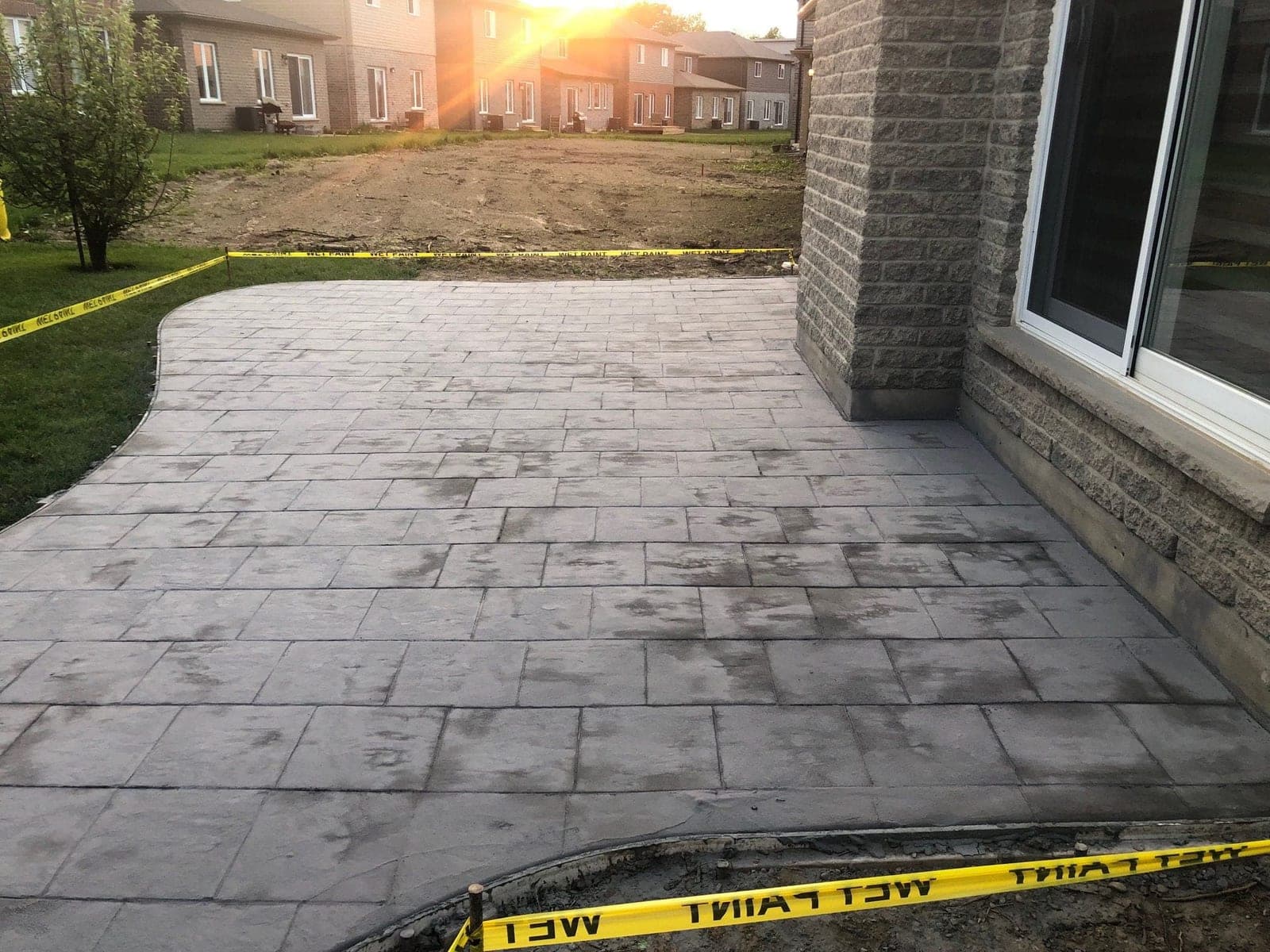
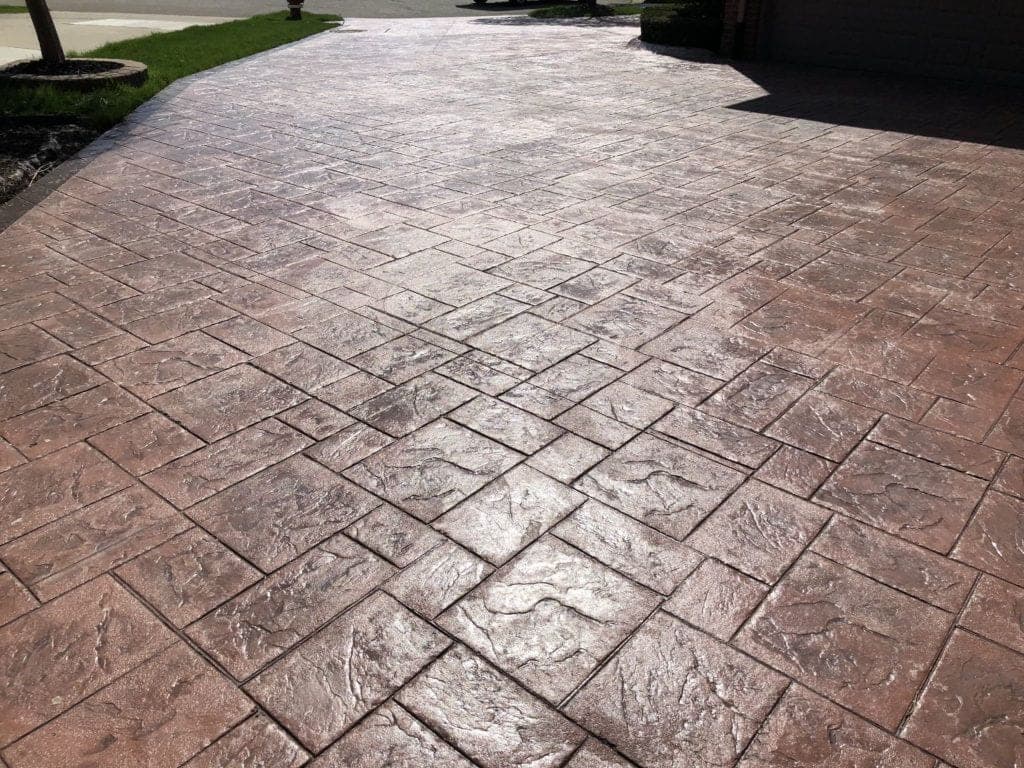
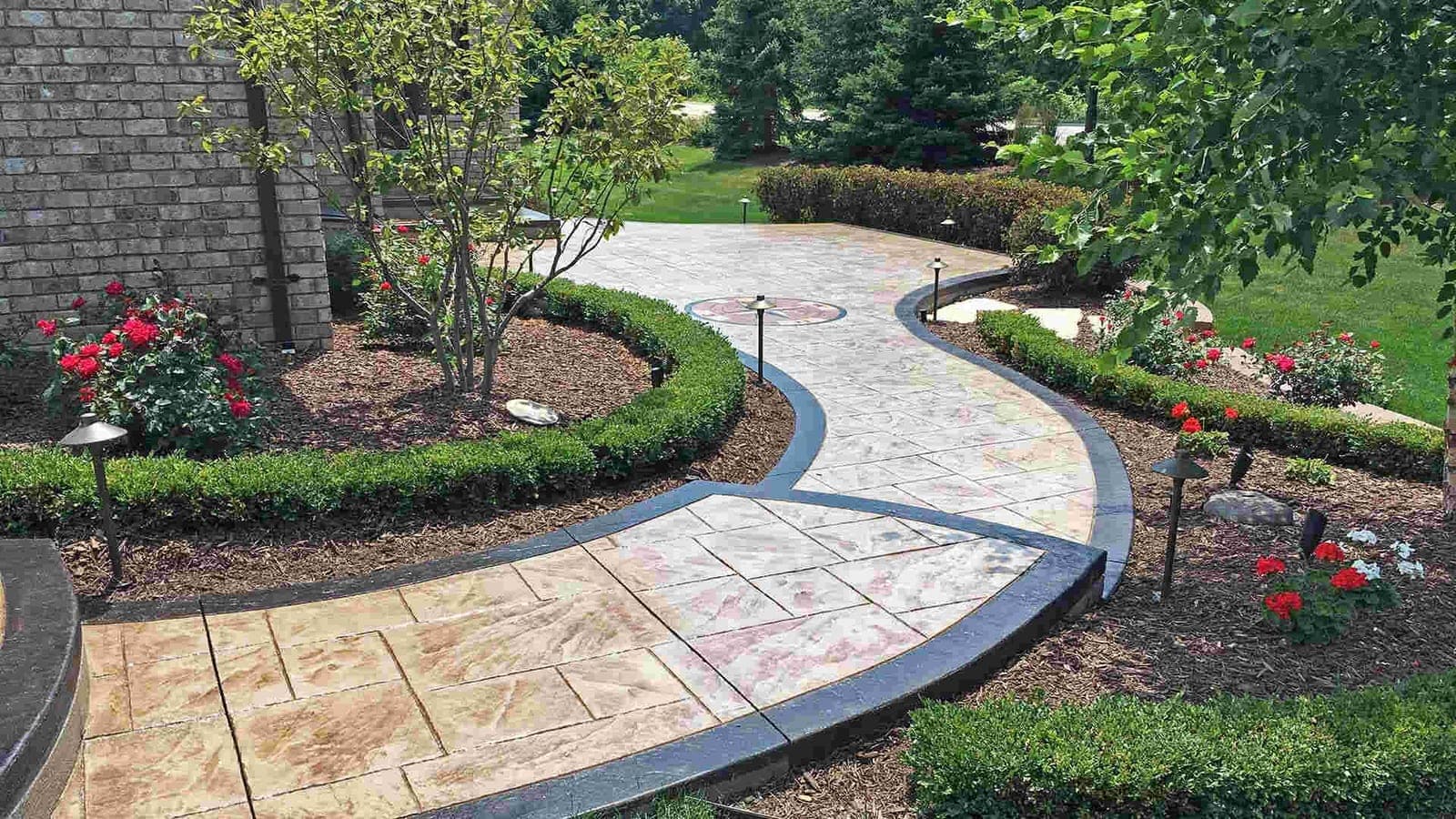
A lot of the patios we seal in Oxford County and surrounding areas are integrally coloured, acid-stained or have a broom-finished texture chosen specifically for its look. UV exposure over a full Southwestern Ontario summer will fade an unsealed coloured surface noticeably within a couple of seasons. Sealing adds a UV-resistant layer on top that slows that fading and keeps the colour looking closer to the day it was installed, season after season.
Freeze-thaw cracking on patios and steps
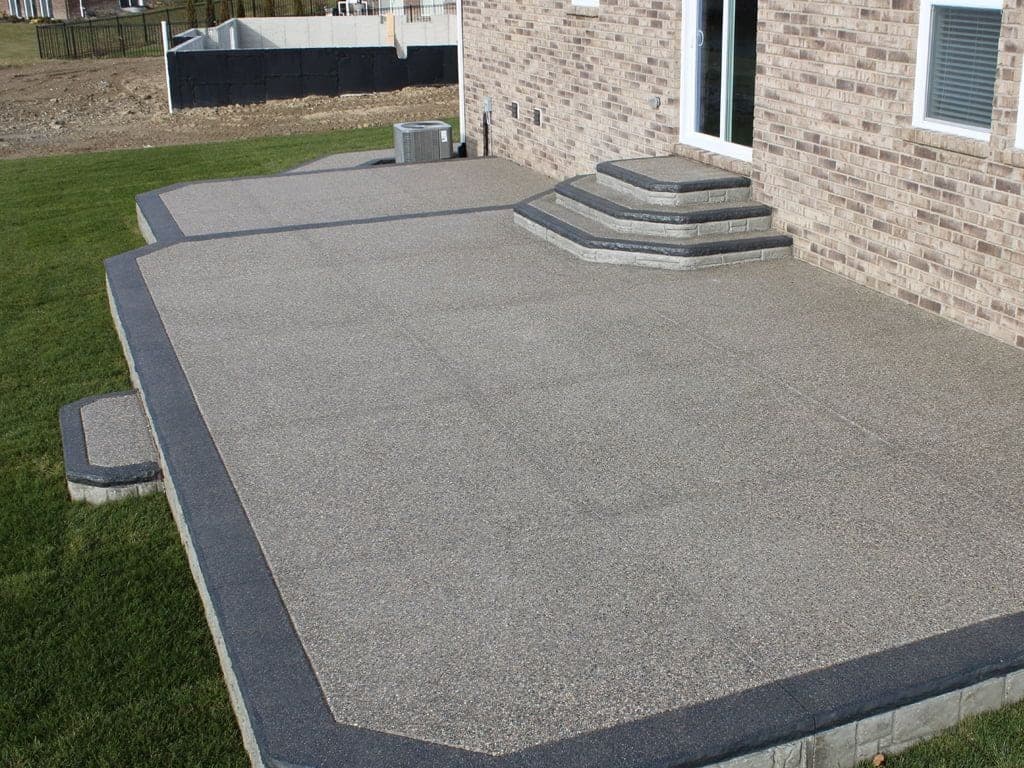
Patio steps and edges are especially vulnerable to freeze-thaw damage because they have more exposed surface area and often less support underneath than a flat slab. Water that gets into small surface cracks on a step nose or patio edge freezes and expands over a Southwestern Ontario winter, widening the crack a little more each year. Sealing closes off that entry point before it becomes a structural problem, protecting the steps as thoroughly as the flat patio surface.
- Resists staining from food, drinks, grease and sunscreen
- Preserves the colour of stained or coloured patios
- Sheds moisture instead of absorbing it
- Protects steps and edges from freeze-thaw cracking
- Comfortable, non-slick finish safe for bare feet
- Anti-slip additive available for dining areas and steps
Anti-slip protection where it matters
Patios near a pool, hot tub or with steps down to the yard benefit from an anti-slip additive mixed into the sealer. It adds texture you can feel underfoot without changing the appearance of the finish, and it is worth discussing during your inspection if your patio sees wet feet regularly or has any elevation change.
Choosing a sheen for outdoor entertaining
Semi-Gloss is the most requested sheen for patios because it gives a warm, satin look that suits outdoor dining spaces without the higher shine of a wet-look finish. Matte works well for homeowners who want a completely natural appearance, and either can be combined with an anti-slip additive without affecting the final look.
Sealing older patios versus new pours
A newly poured patio needs time to fully cure, typically a number of weeks, before it is ready to accept sealer, and rushing that step can trap moisture and cause the coating to fail early. An older, unsealed patio that has weathered a few Southwestern Ontario seasons often shows early staining or slight surface roughness by the time a homeowner calls us, and that is a good sign it is overdue rather than too late. We assess both situations the same way during the inspection, checking moisture levels and surface condition before recommending timing.
When to schedule patio sealing
Late spring through early fall is the best window, once the concrete is fully dry after spring rains and before backyard entertaining season is in full swing. Sealing before a summer of gatherings means the surface is already protected against spills and grease from the first cookout onward, rather than catching up on staining after the fact.