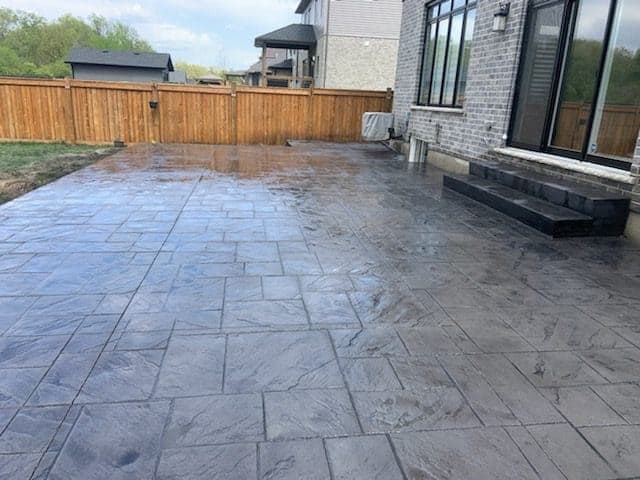
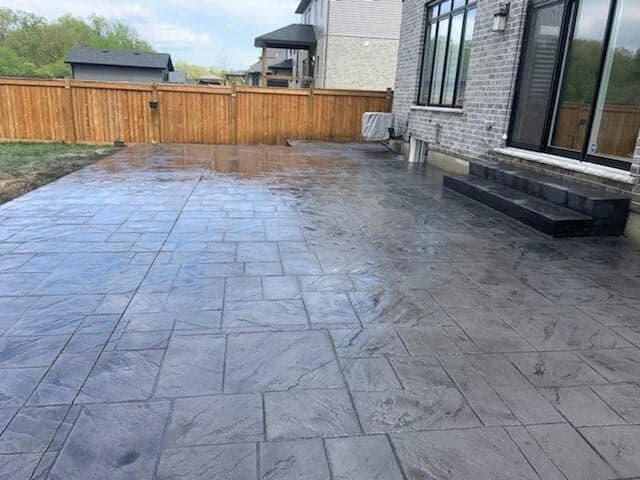
Freshly sealed grey stamped concrete patio beside a cedar fence in London, Ontario, semi-gloss finish by TriCity Concrete Sealing

Stamped Concrete Restoration

Stamped Concrete Sealing That Restores the Wet Look

Stamped concrete loses its depth and pattern definition as the original sealer wears away. All-Seal reseals stamped surfaces to bring back that rich, wet-look colour and protect the pattern from wear, fading and freeze-thaw damage.

Recommended finish

High Gloss

High Gloss delivers the classic wet-look shine that best restores colour depth and pattern contrast on stamped concrete, which is why it is the most requested finish for this surface.

Compare finishes

What's included

How we seal stamped concrete

  1. 1

    On-site inspection

    We check how far the existing sealer has worn, where the pattern lines are most exposed, and whether any joints need attention before quoting.

  2. 2

    Pressure washing

    The stamped surface is pressure washed to lift the worn, chalky remnants of the old sealer along with dirt trapped in the pattern grooves.

  3. 3

    Crack and joint repair

    Cracks and control joints along pattern lines are repaired, since these are usually the first places a stamped surface begins to fail.

  4. 4

    Full drying period

    We allow the stamped surface to dry completely, particularly important in the deeper grooves of the pattern where moisture lingers longest.

  5. 5

    Sealer application

    A fresh sealer is applied evenly across the full stamped area, restoring colour depth and pattern definition in a single, even coat.

  6. 6

    Sheen and pattern check

    We review the finished surface with you, confirming the wet-look depth and pattern clarity before finishing the job.

  • Restores colour vibrancy and depth
  • Redefines worn stamped patterns
  • Wet-look High Gloss or Matte options
  • UV protection slows further fading
  • Extends surface life 2-5 years
  • Works on driveways, patios and pool decks alike
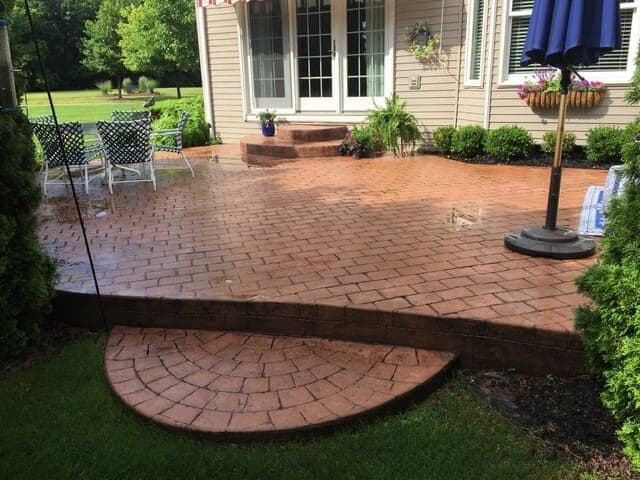
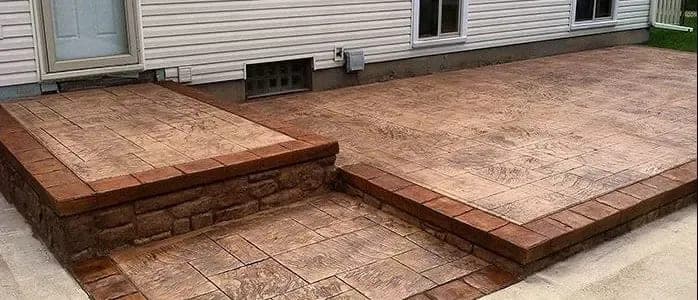
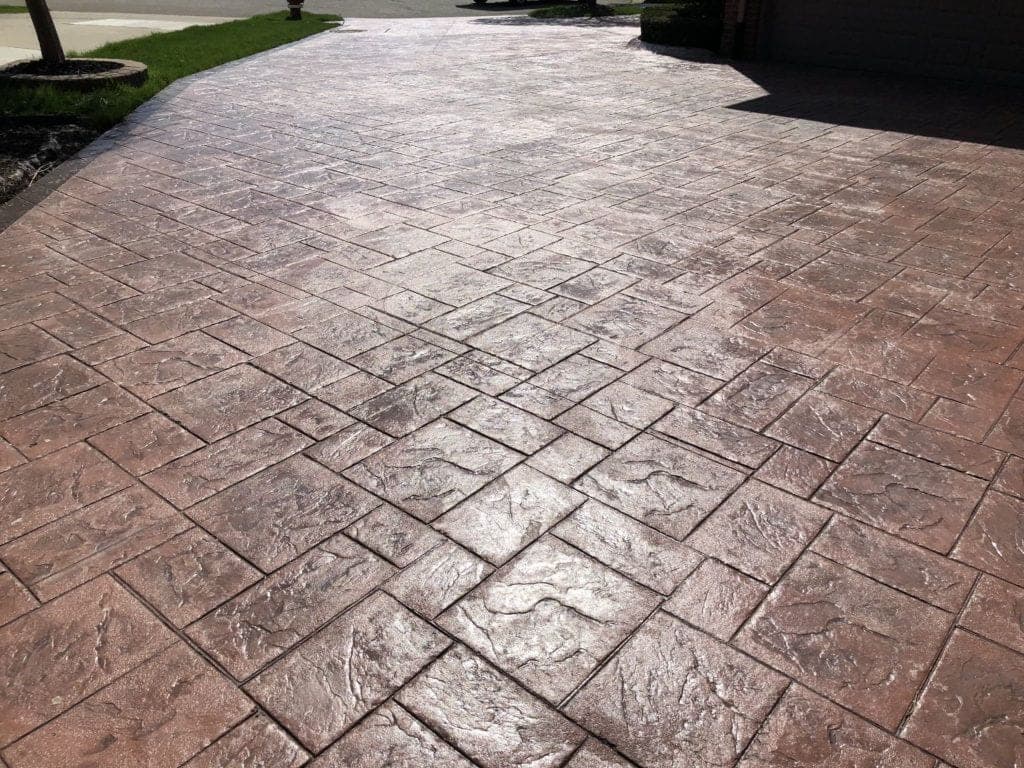
Ashlar slate stamped concrete patio and steps with a semi-gloss sealer
Wide view of a sealed stamped concrete patio with a wet-look finish in London, Ontario

Why stamped concrete loses its lustre

Stamped concrete is installed with a factory-fresh sealer that gives it a rich, saturated colour and crisp pattern definition, but that original sealer is not permanent. Under regular UV exposure, foot and vehicle traffic, and Southwestern Ontario's freeze-thaw winters, the sealer gradually wears thin, then wears through entirely in high-traffic areas. Once that happens, the stamped pattern looks flatter, the colour looks duller, and the surface underneath is exposed to the same water infiltration and staining risk as any unsealed concrete.

All-Seal's stamped concrete sealing service restores what the original installation delivered. We reseal worn stamped surfaces to bring the colour and pattern depth back, then protect it against the same wear cycle going forward.

Reading the wear pattern before resealing

The first sign of a stamped surface needing resealing is usually a lighter, flatter patch in the highest-traffic area, such as the main path across a patio or the tire tracks on a stamped driveway. As wear progresses, the pattern grooves themselves start collecting dirt and losing their crisp edges. We inspect exactly where your stamped surface is in that wear cycle, since a surface caught early needs less preparation than one where the sealer has worn through completely in multiple spots.

Restoring colour vibrancy

The most noticeable result of resealing stamped concrete is the return of colour vibrancy. Stamped surfaces are often integrally coloured or stained during installation, and a worn sealer makes that colour look chalky and washed out compared to how it looked new. A fresh sealer restores much of that original saturation and depth, particularly with a High Gloss wet-look finish, which is why many homeowners are surprised at how much richer their stamped patio or driveway looks after resealing.

Redefining the stamped pattern

Beyond colour, a worn sealer flattens the visual contrast between the raised and recessed sections of a stamped pattern, since dirt and grime settle into the grooves and the surface loses the sheen that used to catch light differently across the texture. Resealing after a thorough pressure wash clears that buildup out of the grooves and restores the visual contrast that makes a stamped pattern look sharp and intentional rather than worn and muddy.

  • Restores colour vibrancy lost to sealer wear and UV exposure
  • Redefines pattern grooves after dirt buildup flattens contrast
  • Available in wet-look High Gloss or a more natural Matte finish
  • UV protection slows the next round of fading
  • Protects against freeze-thaw scaling along pattern lines
  • Extends the surface's protected life by 2 to 5 years

Freeze-thaw damage along pattern lines

Stamped concrete has more surface texture than a smooth slab, which means more edges and grooves where water can collect and freeze. Once the original sealer wears through, those pattern lines become the first place freeze-thaw damage shows up, often as small chips or cracking that follow the stamped grooves themselves. Resealing before that wear reaches bare concrete keeps water out of those vulnerable grooves through the winter.

Choosing between wet-look and natural finishes

High Gloss is the classic choice for stamped concrete because it delivers that deep, wet-look shine that makes coloured stamped patterns look their best, particularly on patios and pool decks where the visual impact matters most. Some homeowners prefer a more subdued Matte finish for driveways or areas that see heavier use, which still restores colour and protection without the higher shine. We will walk through both options and how each looks on your specific pattern and colour during the inspection.

Stamped surfaces beyond patios and driveways

Stamped concrete shows up in pool decks, walkways and even garage aprons, and each of those settings adds its own wear factor to the sealer's lifespan. A stamped pool deck faces constant water and chemical exposure on top of foot traffic, while a stamped walkway deals with more shade and shovel abrasion than a driveway does. We factor in exactly where your stamped surface sits and how it is used when recommending a resealing timeline and product, rather than applying the same assumption to every stamped area on a property.

When to reseal stamped concrete

Most stamped surfaces need resealing every 2 to 5 years depending on traffic and sun exposure, and late spring through early fall is the ideal window to schedule it, giving the new sealer time to cure fully before the next freeze-thaw season begins.
Clients

What owners say after the first rain.

“They transformed my patio — it looks brand new! The team was professional, clean, and explained every step of the process.”
Sarah M. · Woodstock
“Exceeded expectations on our stamped driveway. The colour came back like it was freshly poured. Highly recommend their high-gloss finish.”
Dave R. · Hamilton
“Our pool deck finally feels safe for the kids. The anti-slip finish is exactly what we needed and it looks fantastic.”
Jennifer L. · Brantford

Free quote

Book stamped concrete sealing with a free inspection.

Send the surface, a rough size and a photo if you have one. We inspect for free, recommend a sheen and send a written quote. No deposit to get a number.

  • 519-266-6796
  • Mon – Fri · 7 AM – 6 PM | Sat · 8 AM – 2 PM
  • Woodstock · St. Thomas · Brantford · Hamilton · Kitchener-Waterloo · Cambridge
  • Free quotes and inspections
  • Anti-slip additives available
  • Works on previously sealed surfaces
  • Extends concrete lifespan 2–5 years
  • Premium products only
  • 10+ years experience

Tell us about your concrete

We reply within one business day.

Free inspection · No obligation · Reply within one business day

FAQ

Stamped Concrete Sealing questions

Anything else? Call or use the quote form and we will answer within one business day.

Call 519-266-6796
How do I know if my stamped concrete needs resealing?

Look for lighter, flatter patches in high-traffic areas, dirt settling into the pattern grooves, or an overall dull, chalky appearance compared to how the surface looked when new. Any of these are signs the original sealer has worn through.

Will resealing bring back the original colour?

Resealing typically restores much of the original colour vibrancy and depth, since a worn sealer is often the main reason a stamped surface looks faded rather than the underlying colour itself having changed.

What is the wet-look finish everyone talks about?

It refers to a High Gloss sealer that gives stamped concrete a deep, glossy sheen similar to how it looked freshly installed, which is especially popular for coloured stamped patios and pool decks.

Can you reseal a stamped driveway that gets heavy vehicle traffic?

Yes. We can recommend a Matte or Semi-Gloss finish for driveways that see heavier daily use if a lower-shine, more traffic-tolerant look is preferred over High Gloss.

How often should stamped concrete be resealed?

Most stamped surfaces need resealing every 2 to 5 years depending on how much sun and traffic they see, similar to other sealed concrete.

Does resealing fix cracks in the stamped pattern?

We repair cracks and joints as part of the resealing process, though larger structural cracks from settling may need separate concrete repair before sealing addresses the surface protection.

Wet-look gloss sealer on a stamped concrete driveway in Woodstock, Ontario

Protect. Preserve. Seal.

Seal it before the salt trucks do their rounds.

Free inspection, written quote, your choice of finish. Spring and fall fill fast across Southwestern Ontario.

CallFree Quote