Walkways take more abuse than they get credit for
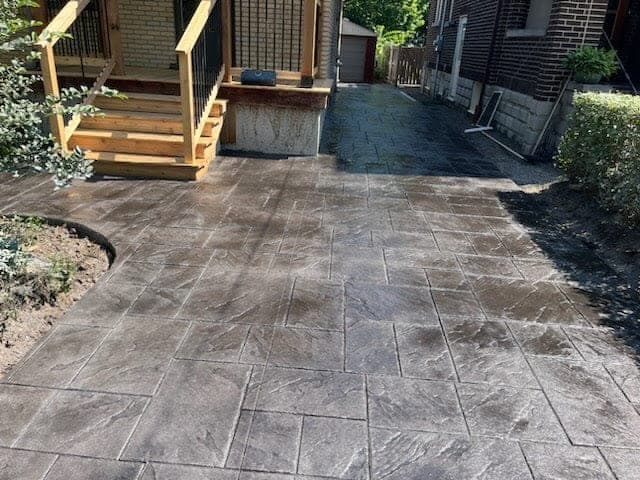
Front walkways and garden paths get walked, shovelled, salted and rained on more consistently than almost any other concrete on a property, yet they are often the last surface homeowners think about protecting. Unlike a driveway, a walkway does not carry vehicle weight, but it takes a steady beating from daily footsteps, snow shovels scraping the surface, and de-icing salt applied liberally to keep the path safe in winter.
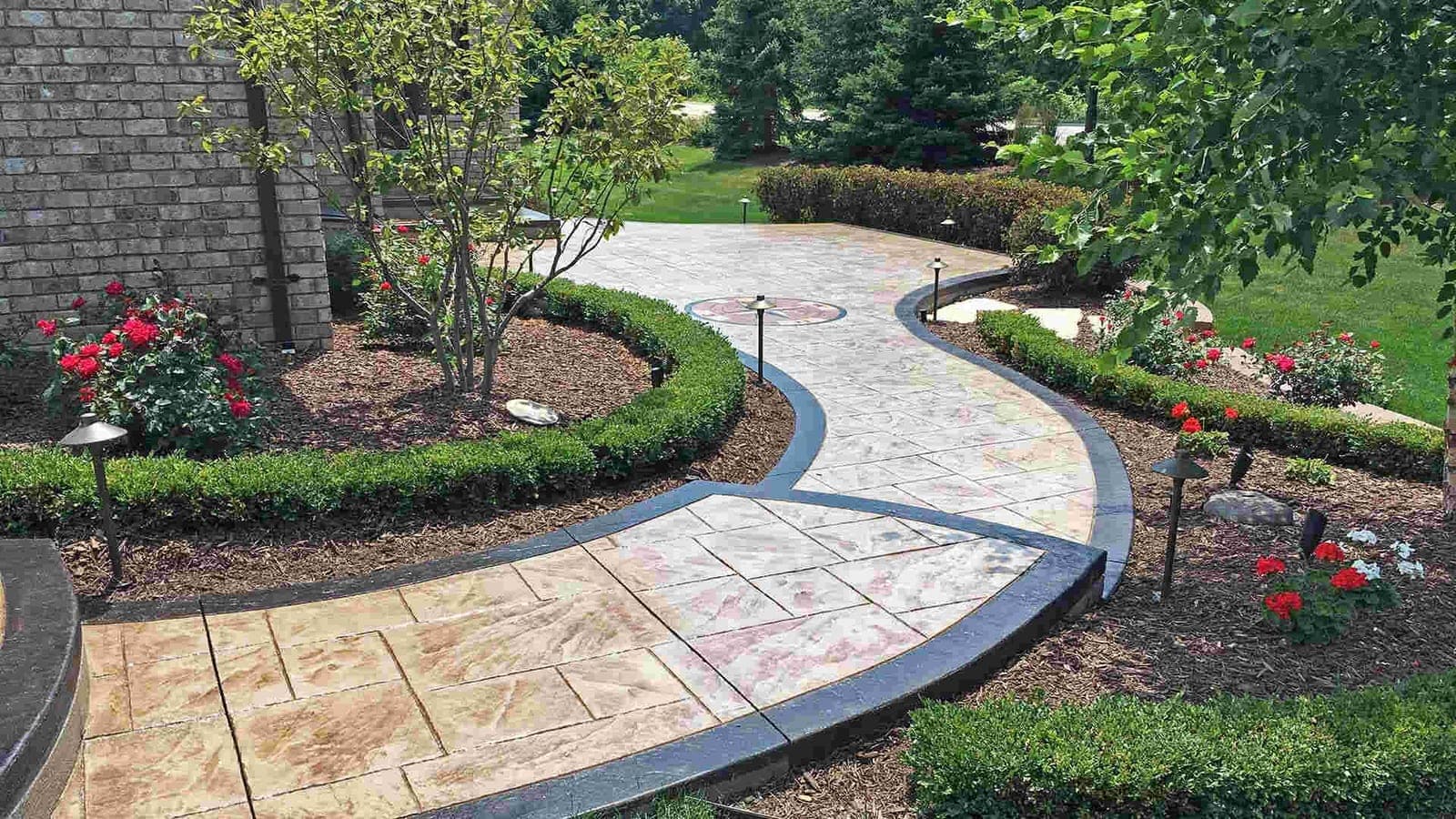
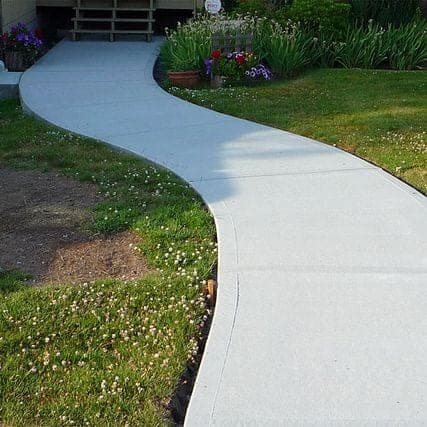
All-Seal's walkway sealing gives these paths the same protection level as a driveway or patio, closing off the surface pores that let water in and set the stage for cracking, staining and moss growth.
Freeze-thaw cracking on narrow paths
Narrow walkways and paths are particularly susceptible to freeze-thaw cracking because they often have less mass and support underneath compared to a full driveway slab, and they typically run along the sides of a house where shade lingers longer. Water that seeps into unsealed concrete along a shaded path freezes overnight through a Southwestern Ontario winter and slowly widens any existing surface imperfection into a full crack. Sealing keeps that water from getting in in the first place.
Moss and algae in shaded sections
Paths that run along the north side of a house, under mature trees or through garden beds tend to stay damp far longer than open, sunny concrete. That constant dampness on unsealed concrete is exactly what moss and algae need to establish themselves, which not only looks unattractive but can make the path genuinely slippery when wet. Sealed concrete holds far less surface moisture, which makes it much harder for moss and algae to take hold along those shaded stretches.
Snow shovels and salt take their toll
Every winter, walkways get scraped repeatedly with metal shovel edges and doused with rock salt or calcium chloride to keep them safe for walking. That combination of physical abrasion and chemical exposure is hard on unsealed concrete, wearing down the surface finish and letting salt penetrate more easily with each pass of the shovel. A sealed walkway resists both the abrasion and the salt penetration far better, so the surface holds its finish through a full winter of shovelling.
- Prevents cracking and spalling caused by freeze-thaw cycles
- Resists moss and algae growth in shaded, damp sections
- Maintains colour and finish under constant sun exposure
- Holds up better to shovel abrasion and de-icing salt
- Easier to sweep and hose clean through the year
- All-season protection from spring thaw through winter
Keeping colour consistent along the full path
A walkway that runs from full sun near the driveway into shade along the side of the house often weathers unevenly when left unsealed, with the sunnier sections fading faster than the shaded ones. Sealing the entire path at once evens out that exposure, so the walkway keeps a consistent colour and finish from one end to the other instead of showing a patchwork of wear.
Sealing garden paths and connecting walkways
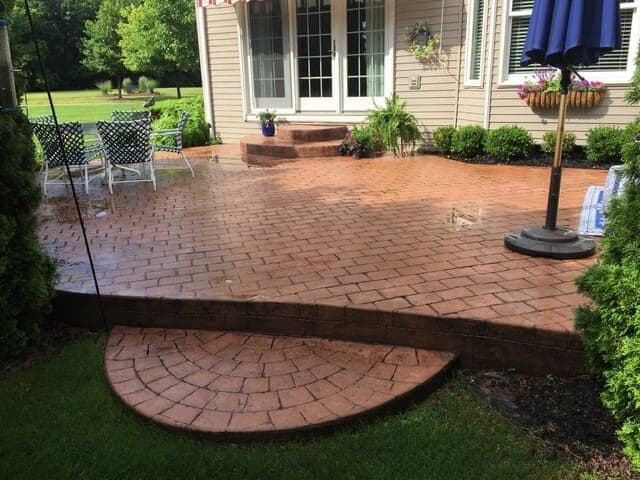
Beyond the front entry walkway, many Southwestern Ontario properties have connecting paths to a side yard, garden, shed or backyard patio. These secondary paths are just as prone to freeze-thaw cracking and moss growth as the main walkway, and sealing them at the same time as your main path or patio is usually the most efficient way to protect the whole property in one visit.
Steps, thresholds and small transitions
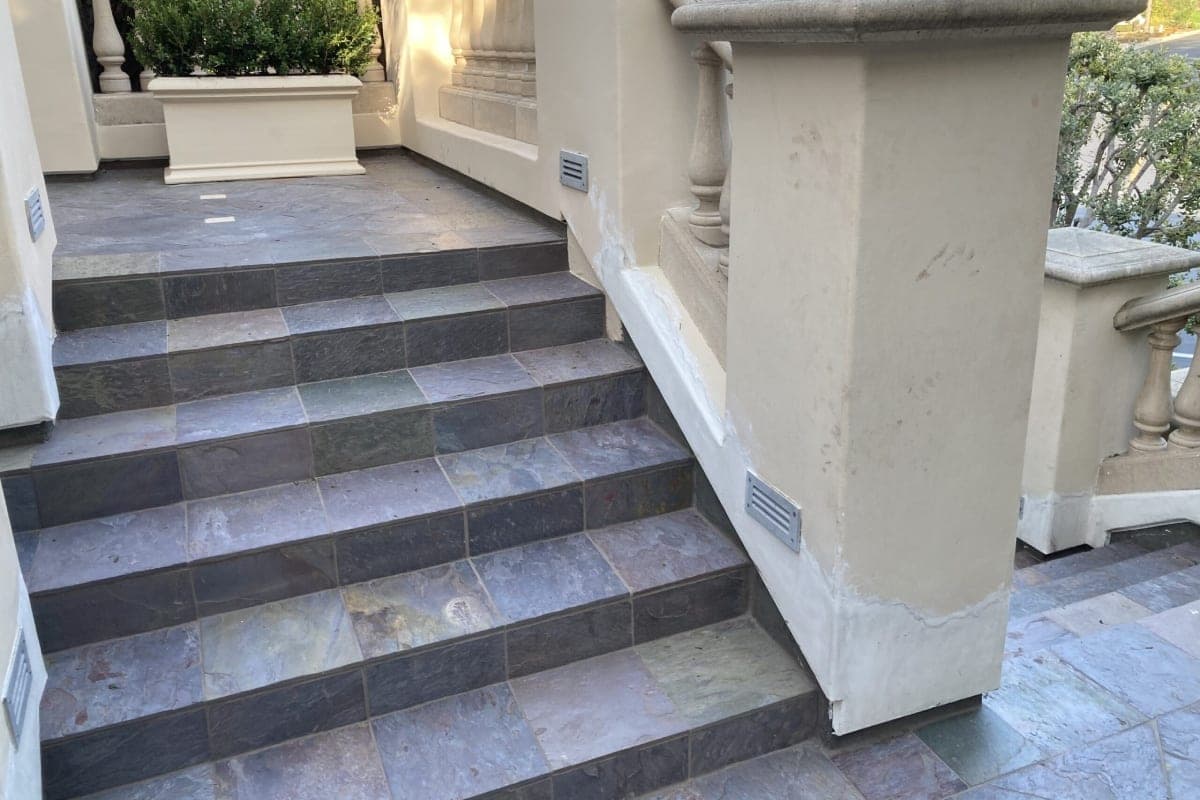
Many walkways include a small step up to a porch, a transition slab at a side door, or a short run of steps down to a basement entry, and these small sections tend to get overlooked in a general assessment of a property's concrete. They see just as much foot traffic and weather exposure as the main path, often more, since they are used every single time someone enters or leaves through that door. We include these transition points in every walkway sealing job rather than treating them as a separate line item, since leaving them unsealed defeats much of the purpose of protecting the rest of the path.
Best time to seal a walkway
Late spring through early fall works well for walkway sealing, once the concrete has dried out from spring rain and before the first frost. Sealing ahead of winter gives the path its best defence against the coming season of shovelling and salting.