Guides/Sealers·8 min read·Updated September 6, 2026
Acrylic, polyurethane and penetrating sealers all protect concrete, but they work in different ways and suit different surfaces. Here is how to think about the choice.
Key takeaways
- 1Acrylic and polyurethane sealers form a protective film on top of the concrete, while penetrating sealers soak in and work below the surface, which is the core difference behind everything else.
- 2Acrylic is the most common choice for driveways and patios, offering a range of sheen options and solid protection at a reasonable value.
- 3Polyurethane generally offers stronger durability against heavy wear, which matters most on garage floors and high-traffic driveways.
- 4Penetrating sealers do not change the surface appearance and work well on older or more porous concrete where a film-forming sealer may not adhere as evenly.
- 5All-Seal recommends the right sealer type during a free on-site inspection based on the concrete's age, condition, and how the surface is actually used.
Once a homeowner decides to seal a driveway, patio, or garage floor, the next question is usually which sealer to use, and the honest answer is that it depends on the surface, its age, and how it gets used, not on which product is objectively best. Acrylic, polyurethane, and penetrating sealers all protect concrete, but they do it in fundamentally different ways, and understanding that difference makes the choice much easier than picking a product name off a shelf.
The core difference: film-forming versus penetrating
Acrylic and polyurethane sealers are both film-forming products, meaning they cure into a thin protective layer sitting on top of the concrete surface. That film is what gives you the sheen options, whether High Gloss, Semi-Gloss, or Matte, since the finish you see is largely the sealer's surface, not the concrete underneath. Penetrating sealers work differently. Rather than sitting on top, they soak into the concrete's pores and react chemically or physically within the material itself, blocking water and chloride penetration from below the surface rather than from a coating on top. This means a penetrating sealer does not add sheen or change the concrete's appearance the way a film-forming product does, since there is no visible film to reflect light.
Acrylic sealers: the versatile, most common choice
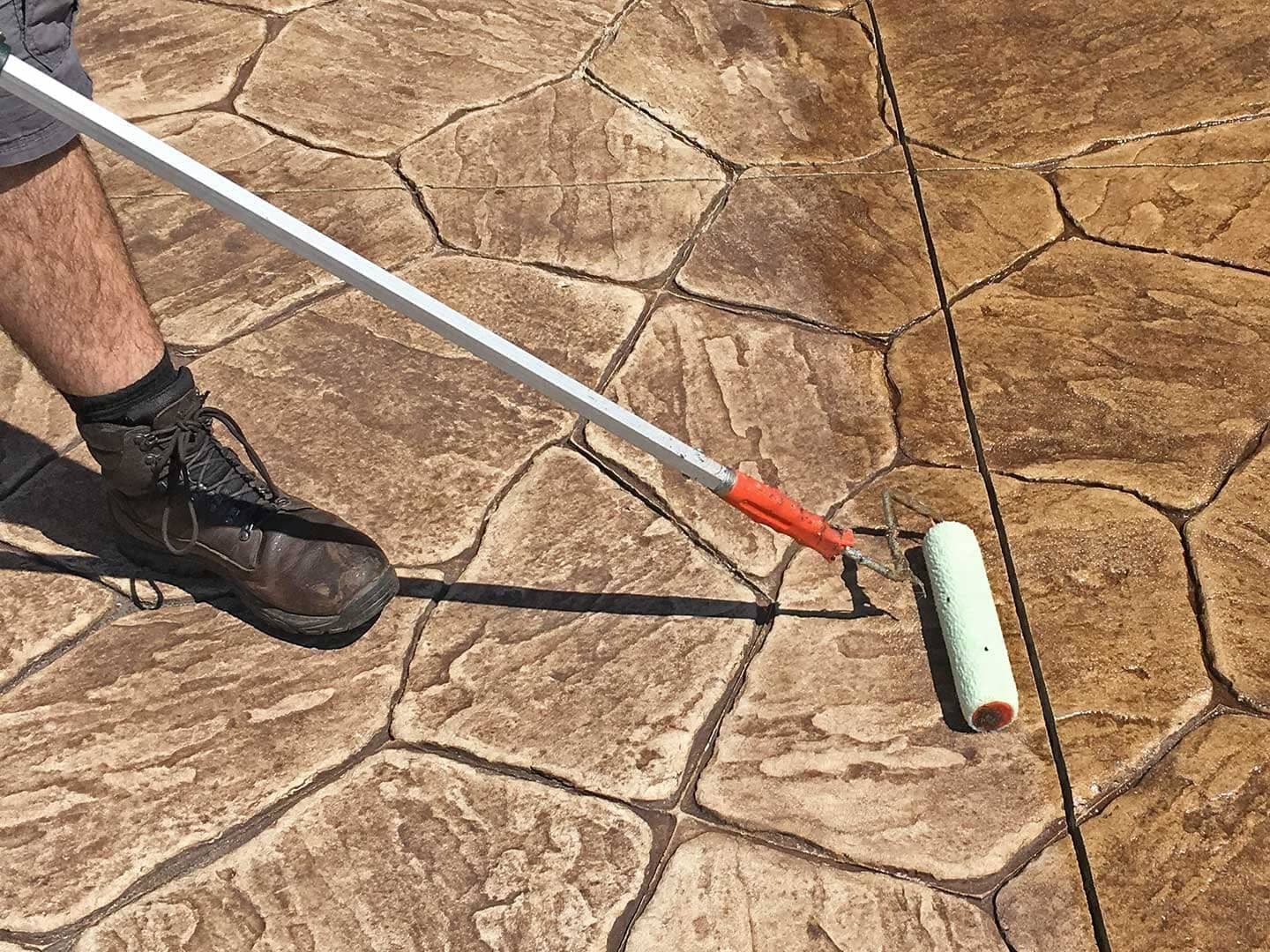
Acrylic sealer is the product All-Seal uses most often, and for good reason. It offers strong protection against water infiltration, road salt, oil staining, and UV fading, while also giving homeowners the widest choice of appearance through the three sheen options at /finishes. Acrylic works well across nearly every surface type: driveways, patios, walkways, and decorative or stamped concrete, where the sheen choice genuinely changes how the finished surface looks. It is a reliable, well-rounded option for most residential concrete in Southwestern Ontario, and its combination of protection and appearance flexibility is why it ends up recommended for the majority of jobs.
Polyurethane sealers: built for heavier wear
Polyurethane sealer is also a film-forming product, but it generally offers stronger durability than acrylic under heavy wear conditions. This makes it a strong candidate for surfaces that take more abuse than a typical patio, particularly garage floors dealing with hot tire pickup risk, oil drips, and tracked-in winter salt, or driveways that see heavy daily vehicle traffic. The added durability can come with trade-offs in application and cost compared to acrylic, which is part of why the choice between the two is worth discussing surface by surface rather than defaulting to one product across an entire property. A driveway and a patio on the same property, for instance, might reasonably use different sealer types if one takes noticeably more wear than the other.
Penetrating sealers: protection without changing the look
Penetrating sealers serve a specific purpose: protecting the concrete from within without altering its surface appearance. This makes them a sensible choice in situations where a film-forming sealer might not be the right fit, such as on older, more porous concrete where surface adhesion for a film coating can be less consistent, or in situations where a homeowner specifically wants to preserve the concrete's natural, unsealed look while still gaining protection against water and chloride infiltration. Penetrating sealers do not provide the sheen options or the surface-level oil resistance that acrylic and polyurethane offer, since there is no film sitting on top to repel a spill before it soaks in. They are a targeted tool for a targeted job rather than a universal replacement for film-forming sealers.
- Acrylic: film-forming, sheen options available, strong all-around choice for driveways, patios and decorative concrete
- Polyurethane: film-forming, stronger durability under heavy wear, well suited to garage floors and high-traffic driveways
- Penetrating: soaks in rather than coating the surface, no change to appearance, suited to older or more porous concrete
How the choice plays out by surface
For a typical driveway seeing normal residential traffic, acrylic is usually the recommended starting point, balancing protection, cost, and appearance well. For a driveway that takes heavier use, such as a shared driveway or one with regular truck or trailer traffic, polyurethane's added durability can be worth the difference. Garage floors, given the combination of hot tire pickup, oil exposure, and tracked-in salt covered in our guide at /resources/sealing-a-garage-floor-hot-tire-pickup-salt-and-oil, often lean toward polyurethane or a high-quality acrylic applied with extra attention to cure time. Patios, walkways, and decorative concrete generally do well with acrylic, since the appearance flexibility matters more on surfaces chosen partly for how they look. Pool decks, covered in more depth at /resources/pool-deck-sealing-chlorine-sun-and-slip-resistance, typically use acrylic or polyurethane with an anti-slip additive mixed in given the wet-footing concerns around water.
What all three sealer types have in common
Regardless of which sealer type ends up right for a given surface, the underlying goals are the same: blocking water infiltration that drives freeze-thaw scaling and spalling over an Ontario winter, resisting road salt corrosion, preventing oil stains from soaking into porous concrete, and slowing UV fading on any coloured or decorative surface. The application process also follows the same core steps regardless of product: thorough pressure washing, crack and joint repair where needed, full drying, and then even application of the chosen sealer. The differences between acrylic, polyurethane, and penetrating sealers show up in how they protect and how they look once cured, not in the preparation work that comes before.
Sealing over concrete that already has a coating
One factor that can influence sealer choice is what is already on the concrete, if anything. Applying a new sealer over an existing coating that is a different chemical type is not always straightforward, and in some cases the old sealer needs to be stripped first to get proper adhesion. This is one of the things assessed during a free on-site inspection, since it affects both the recommended product and the prep work involved. Our guide on /resources/can-you-seal-over-previously-sealed-concrete covers this in more detail for anyone dealing with a surface that was sealed years ago by a previous owner or a different contractor.
Getting the right recommendation for your property
Because the right sealer depends on the specific concrete in front of you, not a general rule, All-Seal's process always starts with a free on-site inspection rather than recommending a product sight unseen. That inspection looks at the concrete's age and condition, how the surface is used day to day, whether it has been sealed before, and what the homeowner wants it to look like once finished. From there, the recommendation between acrylic, polyurethane, or a penetrating sealer, along with sheen and any anti-slip additive, comes from that specific assessment rather than a one-size-fits-all default.
Homeowners across Woodstock, St. Thomas, Brantford, Hamilton, Kitchener-Waterloo, and Cambridge who are unsure which sealer type fits their driveway, patio, garage floor, or pool deck can get a straight answer through a free inspection. Reach out through /contact or call 519-266-6796 to schedule one and get a quote for your specific concrete.
Frequently asked questions
What is the main difference between acrylic and penetrating sealers?
Acrylic is a film-forming sealer that sits on top of the concrete and creates a visible sheen, while a penetrating sealer soaks into the concrete's pores and protects from within without changing the surface appearance.
Is polyurethane better than acrylic?
Not universally better, just different. Polyurethane generally offers stronger durability under heavy wear, which suits garage floors and high-traffic driveways, while acrylic offers strong protection with more sheen flexibility for most driveways, patios and decorative concrete.
Can I choose which sealer I want, or does All-Seal decide?
All-Seal recommends the sealer type based on a free on-site inspection of your specific concrete, but the final decision, including sheen and any anti-slip additive, is discussed with you before the quote is finalized.
Does a penetrating sealer change how my concrete looks?
No. Penetrating sealers do not form a visible film, so they do not add sheen or change the concrete's appearance the way acrylic or polyurethane do.
Which sealer is best for a garage floor?
Polyurethane or a high-quality acrylic applied with extra attention to cure time both work well for garage floors, given the combination of hot tire pickup risk, oil exposure and tracked-in winter salt those surfaces face.
Can different sealers be used on different surfaces at the same property?
Yes. It is common for a driveway and a patio on the same property to use different sealer types if one surface takes noticeably more wear or has different appearance goals than the other.
Keep reading
Finishes · 7 min
High Gloss vs Semi-Gloss vs Matte: Which Sheen for Your Concrete
The sealer you choose does more than protect concrete, it changes how the whole surface looks and feels. Here is how to pick between high gloss, semi-gloss and matte for your property.
Costs · 7 min
What Affects the Cost of Concrete Sealing in Southwestern Ontario
There is no single price for concrete sealing because no two properties are the same. Here is what actually drives the cost of a quote across Southwestern Ontario.
Planning · 8 min
How Long Does Concrete Sealer Last in Ontario
Freeze-thaw cycles and road salt make Southwestern Ontario one of the tougher climates for a concrete sealer to hold up in. Here is what actually shortens or extends that lifespan.