Guides/Process·8 min read·Updated September 6, 2026
Most concrete that needs resealing already has an old coating on it. Here is how that existing sealer is assessed and when it needs to come off first.
Key takeaways
- 1Yes, you can generally seal over previously sealed concrete, but the existing coating needs to be assessed first rather than assumed to be compatible.
- 2A sealer that is worn but still adhering well can often be recoated directly after proper cleaning, without a full strip.
- 3A sealer that is peeling, flaking, cloudy, or chemically incompatible with the new product usually needs to be stripped before resealing.
- 4Mixing incompatible sealer types, such as applying a solvent-based product over an unremoved water-based film, can cause the new coat to fail early.
- 5All-Seal's free on-site inspection includes assessing any existing coating so the recommendation and quote reflect what your specific concrete actually needs.
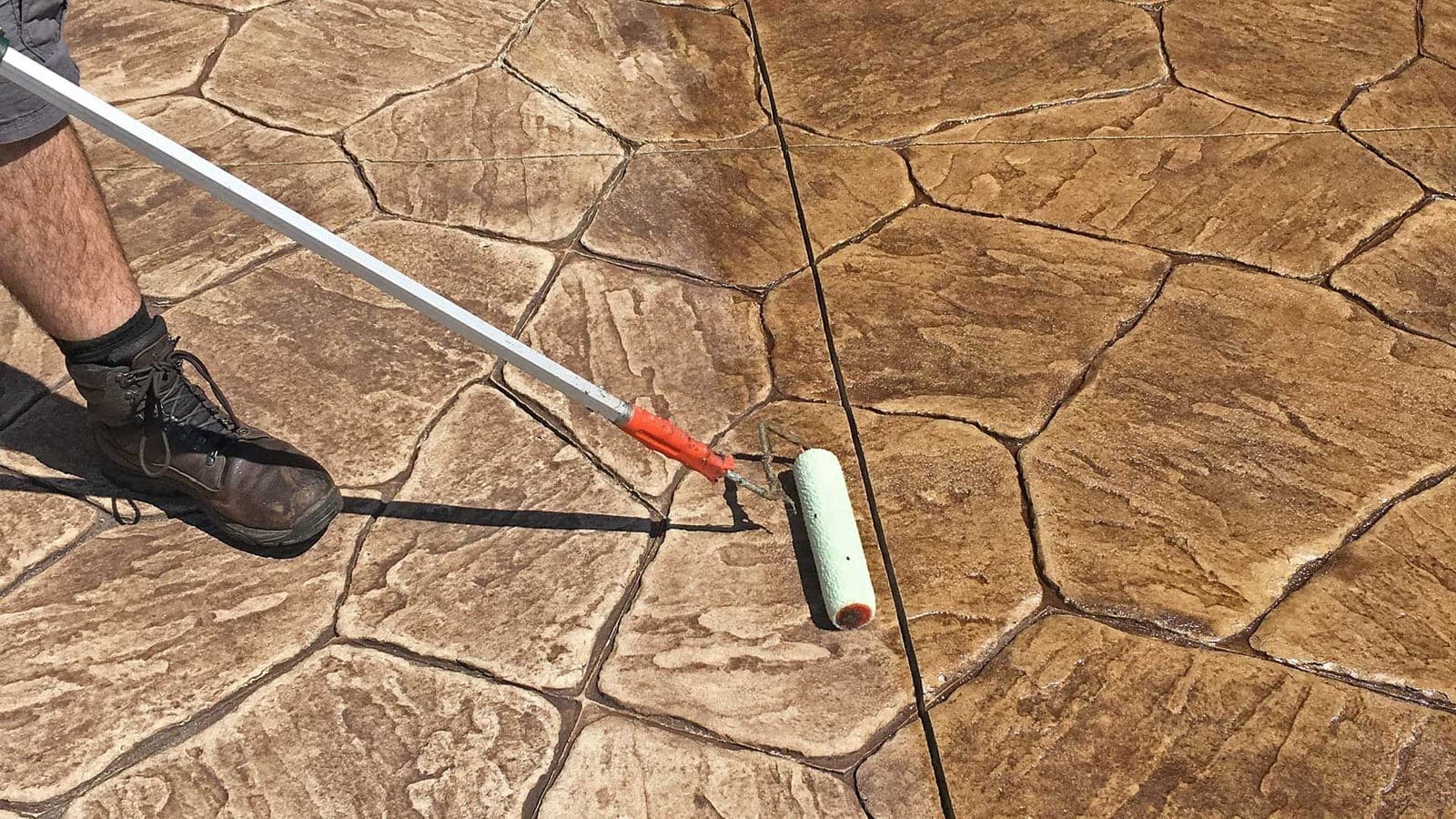
Most of the resealing work All-Seal does is not on bare, never-sealed concrete. It is on driveways, patios, and garage floors that already have a coating from a previous sealing job, sometimes done by All-Seal years earlier and sometimes done by a previous owner or a different contractor entirely. The question that comes up constantly is whether that old sealer needs to come off first, or whether a new coat can simply go over top. The honest answer is that it depends on the condition of what is already there, and figuring that out is one of the first things done during any resealing job.
The short answer: usually yes, with an assessment first
In most cases, previously sealed concrete can be resealed without a full strip, provided the existing coating is still in reasonably good condition and adhering properly to the concrete underneath. A sealer that has simply worn thin over a few years of Southwestern Ontario winters, no longer beading water the way it once did but still intact and not flaking, is usually a good candidate for a direct recoat after proper cleaning. The trouble comes when the existing coating has failed in a way that a new layer on top would not fix, or when the old and new sealers are chemically different enough that they will not bond properly together.
Signs the old sealer can likely be recoated directly
- The surface still looks mostly even, without large areas of flaking or peeling
- Water no longer beads well, but the coating is not visibly lifting off the concrete
- The sealer has dulled or faded from UV exposure but remains fully adhered
- There is no whitish, cloudy haze suggesting moisture trapped under the coating
- The concrete underneath is structurally sound, without significant new cracking since the last sealing job
Signs the old coating needs to be stripped first
Some conditions make a direct recoat unreliable, and pushing ahead anyway usually means the new sealer fails faster than it should. Peeling or flaking sealer is the clearest sign, since applying a new coat over a surface that is already lifting just traps the problem under a fresh layer rather than fixing it. A cloudy, whitish haze across the surface often indicates moisture got trapped beneath the sealer at some point, sometimes called blushing, and that trapped moisture needs to be dealt with before a new coat will adhere properly. Heavy efflorescence, the chalky white mineral deposits that can form when water moves through concrete and evaporates at the surface, is another sign the existing sealer is no longer doing its job and the surface needs more than a simple recoat.
Why sealer type compatibility matters
Not all sealers are chemically compatible with each other, and this is one of the more overlooked risks of resealing without a proper assessment. Applying a new acrylic sealer over an old, unremoved coating of a different chemical base, for example, can prevent proper bonding between the layers, leading to poor adhesion, an uneven finish, or a new coat that fails within a much shorter window than expected. This is particularly relevant when a homeowner does not know what type of sealer was used previously, which is common on a home purchased with concrete already sealed by a prior owner. Part of the value of a professional inspection is identifying, or at least testing for, what is already on the concrete before recommending what goes on next, rather than guessing and hoping the new product bonds.
How All-Seal assesses existing coatings
During the free on-site inspection, the existing sealer gets a close visual and physical check: looking for flaking or lifting, checking for cloudiness or trapped moisture, assessing how well water still beads on the surface, and looking at the condition of the concrete itself underneath any wear in the coating. Where the sealer type is uncertain, simple field tests can help identify whether it is more likely water-based or solvent-based, which matters for choosing a compatible new product. This assessment is what determines whether the job moves forward as a straightforward clean-and-recoat, or whether stripping the old coating needs to be part of the scope before sealing begins.
The stripping process when it is needed
When an old coating does need to come off, stripping is done as part of the overall job rather than treated as a separate project. Depending on the coating and the surface, this can involve chemical strippers, mechanical methods, or a combination, followed by thorough cleaning to remove any residue before the concrete moves into the standard preparation steps: crack and joint repair where needed, full drying, and then application of the new sealer. Stripping adds time and labour to a job compared to a direct recoat, which is part of why the free inspection matters, since it lets homeowners know upfront whether their project is a simple recoat or a more involved strip-and-reseal before any commitment is made.
What this means for your quote
Because the condition of existing sealer varies so much from property to property, and even from one section of the same driveway to another, quotes reflect what the inspection actually finds rather than a flat rate for resealing. A patio with a worn but intact old coating and a driveway with peeling, flaking sealer on the same property might need genuinely different approaches, and the quote for each should reflect that. This is also why All-Seal never quotes sight unseen over the phone for a resealing job, since an accurate quote depends on knowing what condition the existing coating is actually in.
Resealing after a long gap
Concrete that has gone many years past its original sealer's useful life, particularly through several Southwestern Ontario winters of freeze-thaw cycling and road salt exposure, is more likely to need stripping and possibly some crack or joint repair than concrete resealed on a more regular schedule. This is one more reason to catch resealing before the old coat fails completely, as covered in more depth in our guide on /resources/how-long-does-concrete-sealer-last-in-ontario. A surface caught while the old sealer is fading but still intact usually keeps the resealing job simpler and less costly than one where the coating has fully broken down and the concrete underneath has started showing wear.
Getting your specific concrete assessed
If you are not sure what condition your existing sealer is in, whether it needs a simple recoat or a full strip, or even what type of sealer was used on your concrete originally, the fastest way to find out is a free on-site inspection with All-Seal. This applies whether your property is a driveway, patio, garage floor, walkway, or pool deck, and whether the surface was last sealed by All-Seal or a previous contractor entirely. Homeowners throughout Woodstock, St. Thomas, Brantford, Hamilton, Kitchener-Waterloo, and Cambridge can reach out through /contact or call 519-266-6796 to schedule an inspection and get an honest, specific quote for what resealing your concrete actually involves.
Frequently asked questions
Can any sealer be applied over any old sealer?
No. Sealer types are not always chemically compatible, and applying a new coating over an incompatible old one can prevent proper bonding, leading to poor adhesion and early failure of the new coat.
How do I know if my old sealer needs to be stripped?
Peeling, flaking, a cloudy or whitish haze, or heavy chalky mineral buildup are all signs the existing coating needs to be stripped rather than recoated directly. A worn but intact coating can often be recoated after proper cleaning.
What if I don't know what sealer was used on my concrete before?
This is common, especially after a home purchase. All-Seal assesses the existing coating during the free inspection, including field testing where needed, to identify what is already there before recommending a compatible new product.
Does stripping old sealer cost more than a direct recoat?
Yes, stripping adds time and labour compared to a straightforward clean-and-recoat, which is why the free inspection happens before a quote is given, so the cost reflects what your specific concrete actually needs.
Can I seal over concrete that a previous homeowner sealed years ago?
Generally yes, after an assessment. The coating's condition and type need to be checked first, since older coatings are more likely to need stripping than one that was sealed and maintained more recently.
Will waiting longer to reseal make stripping more likely?
Yes, in many cases. Concrete that goes years past its sealer's useful life through repeated freeze-thaw cycles and salt exposure is more likely to have coating failure that requires stripping, compared to concrete resealed on a more regular schedule.
Keep reading
Process · 7 min
Anti-Slip Additives for Sealed Concrete Steps, Pools and Walkways
A properly sealed surface can be more slippery when wet, which is exactly why anti-slip additive exists. Here is how it works and where it matters most.
Finishes · 7 min
High Gloss vs Semi-Gloss vs Matte: Which Sheen for Your Concrete
The sealer you choose does more than protect concrete, it changes how the whole surface looks and feels. Here is how to pick between high gloss, semi-gloss and matte for your property.
Costs · 7 min
What Affects the Cost of Concrete Sealing in Southwestern Ontario
There is no single price for concrete sealing because no two properties are the same. Here is what actually drives the cost of a quote across Southwestern Ontario.