Guides/Process·7 min read·Updated September 6, 2026
A properly sealed surface can be more slippery when wet, which is exactly why anti-slip additive exists. Here is how it works and where it matters most.
Key takeaways
- 1Sealer creates a smoother, more water-resistant surface, which can also make concrete more slippery when wet unless an anti-slip additive is used.
- 2Anti-slip additive is standard practice around pool decks and on concrete steps, where wet, bare feet and elevation changes raise the stakes of a slip.
- 3The additive can be mixed into any sheen, high gloss, semi-gloss or matte, so slip resistance does not require sacrificing the look a homeowner wants.
- 4Anti-slip texture is subtle underfoot rather than rough or abrasive, and it is applied evenly as part of the standard sealing process.
- 5Walkways, entry steps and shaded areas prone to ice are also good candidates even outside of pool settings.
Sealing concrete is meant to protect it, but there is a side effect worth understanding before choosing a finish: a smooth, well-sealed surface can be more slippery when wet than the same surface unsealed, simply because the sealer creates a tighter, less porous film that water sits on top of rather than soaking into. Around a pool deck or on a set of concrete steps, that is exactly the situation where a slip matters most. Anti-slip additive exists to solve this trade-off, and it is worth understanding how it works, where it is genuinely worth having, and how it fits into the sheen decision most homeowners are already making.
Why sealed concrete can be more slippery than unsealed concrete
Unsealed concrete is naturally porous, which gives water somewhere to go and gives bare feet or shoe soles a bit more grip on the textured surface underneath. Sealing fills in that porosity to block water infiltration, road salt, oil stains and UV fading, which is the whole point of the service, but it also means water tends to sit on top of the sealed surface rather than being absorbed. A thin film of standing water on a smooth, sealed surface is more slippery than the same amount of water on unsealed, textured concrete. This effect is more noticeable with a higher-gloss finish, since a smoother, shinier surface generally offers less natural texture than a matte one, though even matte sealer benefits from additional grip in the areas where slipping carries real consequences.
Where anti-slip additive matters most
Not every sealed surface needs anti-slip additive, and All-Seal does not recommend it as a blanket requirement for every job. It is standard practice specifically around pool decks and on concrete steps, for reasons that are fairly intuitive once you think through how each surface actually gets used. Pool decks are wet almost by definition, people walk on them barefoot, and they often see fast-moving kids and distracted adults carrying towels, drinks or pool equipment, all of which raises the consequences of a slip. Concrete steps combine a wet or icy surface with an elevation change, which turns a minor slip into a fall with real potential for injury. Between the two, steps arguably carry the highest stakes, since a slip on a flat pool deck is usually less serious than a slip on stairs.
Pool decks: wet, bare feet and constant use
A pool deck is in near-constant contact with water from splashing, dripping swimmers and pool maintenance, which means it rarely gets a chance to fully dry between uses during swimming season. Combine that with bare feet, which have less natural traction than rubber-soled shoes, and pool decks become one of the clearest cases where anti-slip additive earns its place. All-Seal treats anti-slip as a standard part of pool deck sealing rather than an optional upgrade, precisely because the everyday use case of a pool deck involves exactly the wet, bare-feet conditions where the additive makes the most practical difference. Full detail on pool deck sealing is available at /services/pool-deck-sealing.
Steps: where a slip has the highest consequences
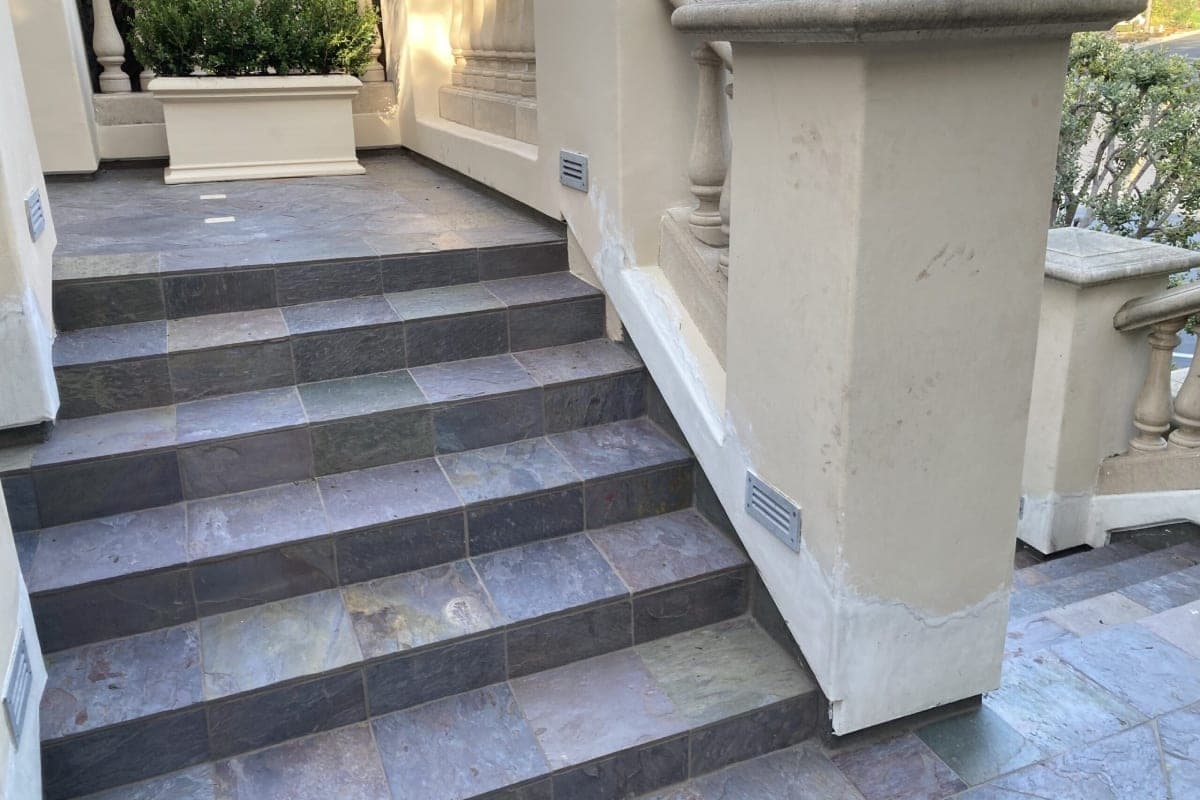
Concrete steps, whether leading up to a front door, down to a walkout basement, or around a pool deck, deserve particular attention because the elevation change means a slip is far more likely to result in a fall than the same slip on flat ground. Steps are also frequently used in a hurry, whether that is rushing out the door in the morning or coming in from the rain, which is exactly when reduced attention meets reduced traction. Adding anti-slip additive to any set of concrete steps being sealed is a small addition to the job that meaningfully reduces one of the more common ways people get hurt around a property in wet or icy conditions.
Walkways and other candidates outside pools and steps
While pools and steps are the two situations where anti-slip is treated as standard, other areas can benefit from it as well, particularly walkways that sit in heavy shade and stay damp or icy longer than sun-exposed areas, or a section of driveway near an entry door that sees heavy foot traffic in winter. Homeowners across Southwestern Ontario dealing with a persistently icy or slick spot, even one that is not technically a step or a pool deck, can ask about adding the additive to that specific area during a free on-site inspection. More on walkway sealing generally is available at /services/walkway-sealing.
- Pool decks: standard practice due to constant water exposure and bare feet
- Concrete steps: standard practice due to the elevated risk of a fall from a slip
- Shaded walkways that stay damp or icy longer than sun-exposed areas
- High-traffic entry points near doors, especially in winter
- Any area a homeowner has personally found slick in wet or icy conditions, regardless of type
How the additive works without changing the sheen you want
One of the most useful things to understand about anti-slip additive is that it is not tied to a specific finish. It can be mixed into high gloss, semi-gloss or matte sealer, which means a homeowner does not have to choose between the look they want and the traction they need. A pool deck sealed in semi-gloss for a richer colour can still carry the same anti-slip performance as one sealed in matte. This flexibility is part of why the additive is such a low-friction addition to a job: it solves a real safety consideration without forcing a compromise on appearance. More on sheen choice generally is covered in our companion guide on high gloss versus semi-gloss versus matte at /resources.
What the texture actually feels like underfoot
A common assumption is that anti-slip texture will feel rough or gritty, similar to sandpaper. In practice, a properly applied additive creates a subtle texture, enough to meaningfully improve traction without feeling abrasive to bare feet on a pool deck or uncomfortable to walk on regularly. The additive is mixed into the sealer and applied as part of the standard process, so it goes down evenly across the surface rather than as a separate rough coating layered on top. The goal is added grip that does not change how the surface feels to sit on, walk on in bare feet, or maintain over time.
Deciding whether your project needs it
For most driveways and plain walkways with normal foot traffic, standard sealer without additive performs perfectly well, and All-Seal does not push anti-slip onto every job as an unnecessary upsell. The clearest signals that it is worth adding are a pool deck, a set of steps, or a specific area that has already felt slick underfoot during rain or after a light freeze. If any of those apply to your property, it is worth raising during the free on-site inspection so it can be built into the plan from the start, rather than something addressed after the fact.
Getting anti-slip added to your next sealing project
Whether you are planning to seal a new pool deck, refresh a set of front steps, or address a walkway that has felt slippery in past winters, the anti-slip additive is a straightforward option to include as part of your quote. All-Seal Concrete Sealing serves Woodstock, St. Thomas, Brantford, Hamilton, Kitchener-Waterloo, Cambridge and the surrounding area, and every job begins with a free, no-obligation on-site inspection where sheen, sealer type and anti-slip needs are all discussed together. Reach out through /contact or call 519-266-6796 to get started, and review the full range of services at /services or finish options at /finishes. Protect. Preserve. Seal, safely underfoot as well as against the weather.
Frequently asked questions
Does sealing concrete make it more slippery?
Sealed concrete can be more slippery when wet than unsealed concrete, since sealer creates a smoother, less porous surface that water tends to sit on top of rather than soak into. Anti-slip additive addresses this trade-off.
Is anti-slip additive required for every sealing job?
No. It is standard practice around pool decks and on concrete steps, where wet conditions and elevation changes raise the consequences of a slip, but it is not necessary on every driveway or walkway.
Can I get anti-slip additive with a high-gloss finish?
Yes. The additive can be mixed into high gloss, semi-gloss or matte sealer, so you do not have to choose a specific sheen to get added traction.
Does anti-slip texture feel rough underfoot?
No. A properly applied additive creates a subtle texture that improves traction without feeling abrasive, even for bare feet on a pool deck.
Should I add anti-slip additive to a shaded walkway?
It can be a good candidate if the area regularly stays damp or icy longer than sun-exposed parts of the property. This can be discussed during a free on-site inspection.
How do I add anti-slip additive to my next sealing project?
Mention it during your free on-site inspection so it can be included in the plan and quote from the start. Request an inspection through /contact or by calling 519-266-6796.
Keep reading
Process · 8 min
Can You Seal Over Previously Sealed Concrete
Most concrete that needs resealing already has an old coating on it. Here is how that existing sealer is assessed and when it needs to come off first.
Finishes · 7 min
High Gloss vs Semi-Gloss vs Matte: Which Sheen for Your Concrete
The sealer you choose does more than protect concrete, it changes how the whole surface looks and feels. Here is how to pick between high gloss, semi-gloss and matte for your property.
Costs · 7 min
What Affects the Cost of Concrete Sealing in Southwestern Ontario
There is no single price for concrete sealing because no two properties are the same. Here is what actually drives the cost of a quote across Southwestern Ontario.